
Game changers
by Charles Perez (M.A. ’25)
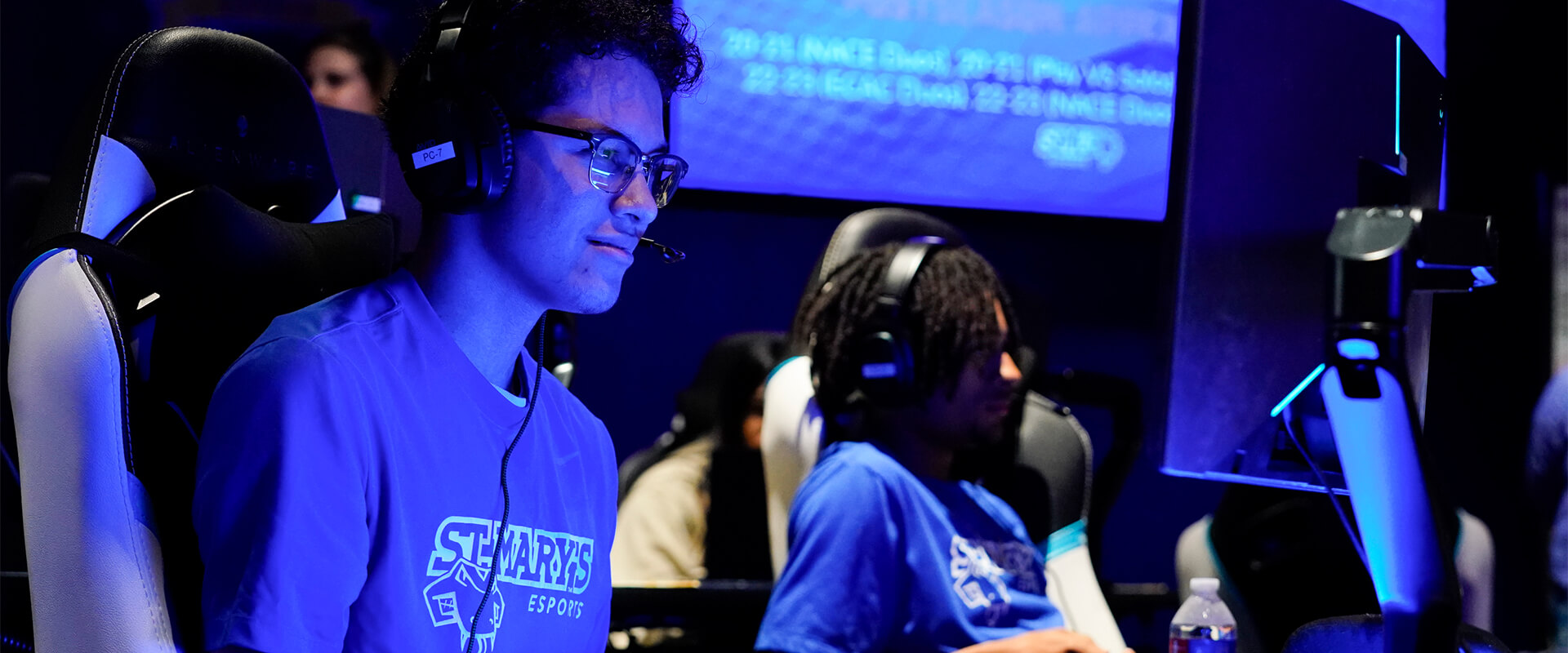
Instead of gridiron, visualize a digital arena. Instead of a chalkboard, a widescreen. Instead of safety equipment, a headset and controller.
Both the classroom curriculum and the varsity sports offerings at St. Mary’s University have entered the realm of gaming while retaining a sense of community.
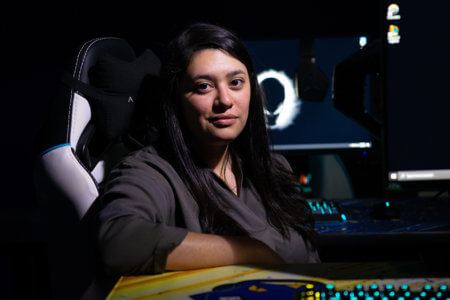
After a successful 2024-2025 season for the St. Mary’s Rattler Esports team that included an undefeated season by the Rocket League team, the Call of Duty team earning a third-place finish in the ECAC Esports Division, and a cumulative 3.4 GPA for the season, Rattler Esports Director Kaitlin Teniente praises the team’s growth from the campus-wide support.
“In those early years, the strong community we have on campus shaped the culture within the program,” Teniente said. “The University strives for academic and competitive excellence, and our students often meet and exceed those high expectations.”
With a stream of recent achievements, it is no wonder that the spotlight continues to shine on Rattler Esports.
The culture of gaming
Visiting Assistant Professor of Communication Studies, Andrew J. Wilson, Ph.D., knows all about the culture of gaming.
After being gifted Warcraft III: Reign of Chaos by Blizzard Entertainment for his 10th birthday, Wilson was hooked. His interest in real-time strategy games laid the foundation for his interest in game studies while earning his Ph.D. at the University of Oregon’s School of Journalism and Communication.
For Wilson, incorporating game studies into communication studies is a sign of the times.
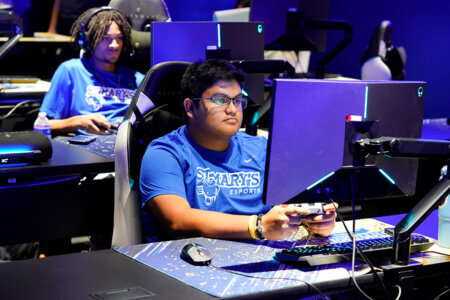
“Gaming is becoming increasingly normalized thanks to the streaming boom and more common representation on social media,” Wilson said. “Every day, people are seeing gaming as a normal thing that celebrities, athletes and politicians enjoy. We’re slowly making progress at changing social understandings of who gamers are and what games are all about.”
In Spring 2026, Wilson taught a New Tech in Communication course, focusing on games, culture and emerging media. This course engaged students with the technological context of human communication and fostered critical thinking about computer-mediated interaction; cyber identity; and issues related to gender, race, class and age.
When analyzing these topics through the lens of game studies, Wilson introduces students to the broader culture of gaming, then focuses on topics such as content creator culture, live streaming, AI and gaming, labor practices in the game industry, games and mental health, the globalization of gaming and media representation.
“I have students play games for assignments, and there’s always a point,” Wilson said. “We’ll look at the narrative architecture of a game like Minecraft, or have them play a game where the main character is a female and then ask, ‘What does that representation do? Is it challenging or feeding into stereotypes?’ I ask students to play a first-person shooter game (typically a weapon-based game that is viewed through the eyes of the character) and reflect on the violence they see simulated and ask how it made them feel exiting that play experience.”
Wilson’s message to anyone hesitant to incorporate gaming into their lives is simple: “Play more games. Invite your friends, your family, your loved ones and use games to socialize and build connections.”
The future of gaming at St. Mary’s
At the start of their sixth competitive season, Rattler Esports has an impressive roster of 25 varsity student-athletes, composed of dedicated teams that compete against other colleges in five games: Call of Duty, Fortnite, Rainbow Six Siege, Rocket League and Valorant.
Some of that team growth can be linked to the University’s annual esports summer camps. These camps are co-ed and offer sixth through 12th-grade students of all skill levels the opportunity to learn game fundamentals, team skills and multimedia training.
Not only are these camps beneficial for the students attending, but many former campers choose to become official Rattlers and join the Esports team as undergraduate students.
“Two of my Rocket League players and one of my Fortnite student–athletes were recruited from the summer camps,” Teniente said. “It’s a full circle moment for me to have campers return as St. Mary’s students and help me run these summer camps. It shows that this program has had a very positive impact on those who attend.”
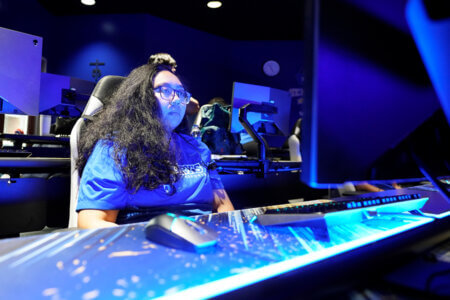
Junior Chelsy Tinacba, a Computer Science major, plays on the Rocket League team and has fond memories of her time attending an esports summer camp at St. Mary’s.
“I was able to meet peers from across San Antonio and get first-hand experience on what it’s like to play esports at the collegiate level,” Tinacba said.
The summer camp’s structure was a selling point for Tinacba to attend St. Mary’s as an undergraduate.
“Esports are taken very seriously here,” Tinacba said. “The structure and expectations set by Coach Kaitlin were an eye-opener. I really loved my transition from summer camp attendee to St. Mary’s student because I learned in camp that this program does more than just play video games, and I learned that you will always have support to get where you want to be.”
For Teniente, the program’s future is bright with possibilities. Her list of goals for the next five years includes competing against larger universities and expanding student worker opportunities that will focus on growing their roster.
Teniente explains that as the program gains more student workers, “they also bring very interesting and innovative ideas.”
“Some of the best ideas we’ve implemented have been from student workers who say, ‘Hey, coach, how can we do this? How can we do that?’” Teniente said. “Let’s find out together.”