
A Rattlers guide to the World Cup
by Nathaniel Miller

It’s arguably the biggest sports event in the world.
The 2026 FIFA World Cup, a quadrennial international soccer tournament, begins today and will be played throughout stadiums in the United States, Mexico and Canada until July 19.
With the biggest field in the tournament at 48 teams, all will compete to advance out of the group stage and into the knockout rounds.
The thrill of “the beautiful game” at an international level brings thrills and chills. For casual or new fans it can be a learning curve.
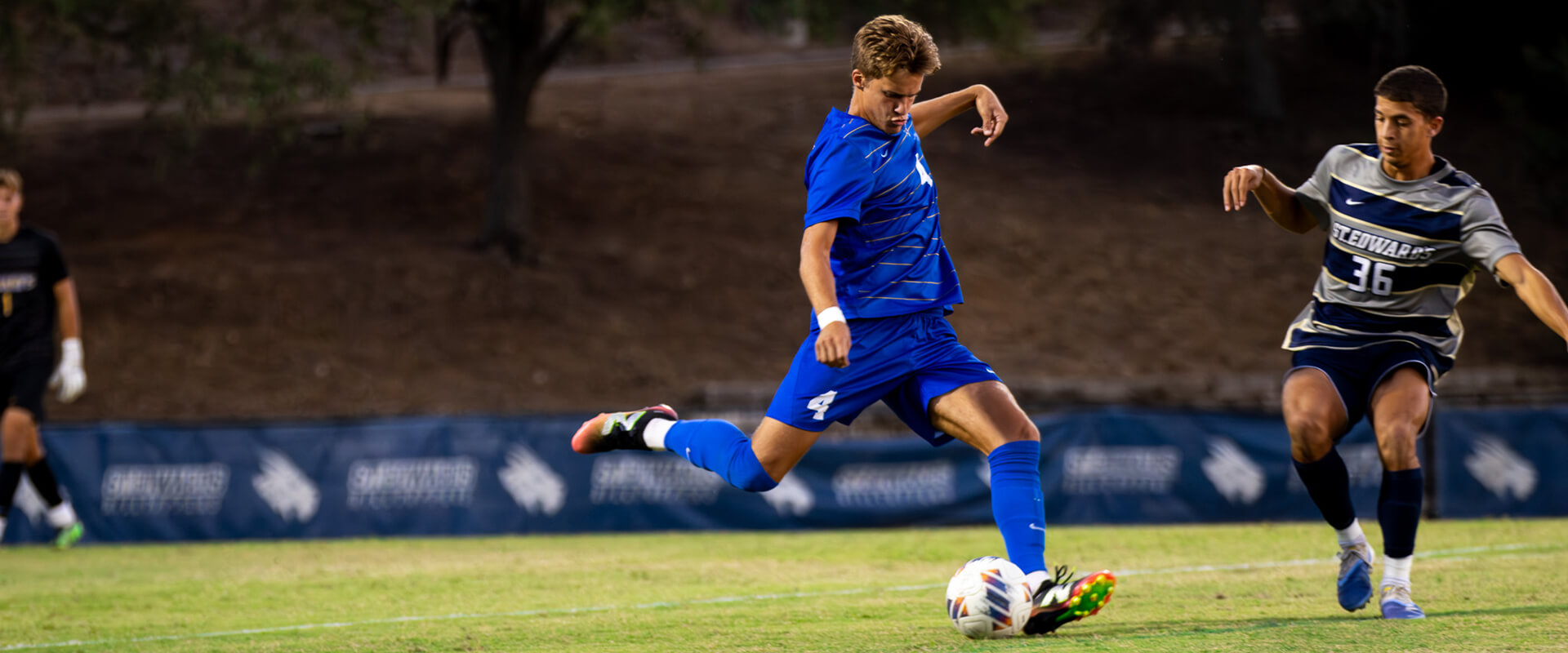
St. Mary’s University Men’s Soccer Head Coach Johnny Clifford, who is originally from Scotland, joined the staff of Gold & Blue magazine to explain how best to enjoy the month-long tournament.
Q: What should casual fans watch for, besides the ball, during a World Cup match?
A: Casual fans should watch for tactics like they would in basketball. Soccer is a game where players move into different positions on the field, and there are different phases of play.
You want to look at how many players are in the back, how many are up top, are they in a solid formation or does the formation slightly change during the game. That’s when you develop a clear understanding of the game
Q: What are the biggest tactical clues that one team is controlling the match?
A: It’s very important to have the ball. One of the biggest clues that someone is dominating the game is if they are keeping the ball more than 60% of the time.
Are they able to get all of their players into the attacking half of the pitch? Are they able to consistently string eight to 12 passes together without the other team touching the ball? That’s a big inclination of who has control.
Q: What does a coach notice that most fans miss when watching World Cup soccer?
A: I always notice in the World Cup how differently a player can play.
Players can learn a lot from their club [team], which is different than how they play at the international level. For example, players from Africa who play for the Premier League in England might play differently in the World Cup or in the African Cup of Nations because the style of football is so different.
You get a lot of pride playing for your country. Lionel Messi plays for Inter Miami CF, and he loves that, but it’s a whole different ball game when he’s playing for Argentina.
Q: What is something every World Cup viewer should know?
A: There’s a big difference between stoppage time and extra time.
Stoppage time is time added on by the referee when the clock runs out of time. You’ve got 45-minute halves, and when you reach that 45 minutes, the siren doesn’t go off. The referee will instruct another official to hold up a board with a number on it, telling the commentators and the crowd how many minutes the referee has decided to add on. This is done because the clock does not stop during play.
Extra time is similar to overtime. If the game ends in a tie during the knockout stages, there will be two 15-minute halves. There is no golden goal [where the first goal wins the game], so the full 30 minutes will be played.
Q: How is international soccer different from college soccer?
A: For me, it’s different because these players are all from the same country. So, Americans are playing together, and all the Brazilians are playing together.
On the Rattler Men’s Soccer Team, we have 12 nationalities, so we have to learn a style that suits everyone while understanding it’s a different game than when playing with people from your home country.
Different leagues around the world have different styles of play, so when playing with people who grew up with the same style as you, you get a different kind of enthusiasm.
Q: How can student-athletes learn from watching World Cup players?
A: They can learn by watching the work ethic of the players. You’ll see people running themselves until they can’t do it anymore.
Players in the World Cup are trying to do everything they can for their country. They’re showing what it means to play with pride. They show what a work ethic is and what hard work is. That’s why there are always magical stories during the World Cup.
Q: What can World Cup soccer teach about leadership, discipline and teamwork?
A: The discipline factor is very important. Coaches during the World Cup are not setting rules for their players. It’s good to be skillful and talented, but these guys didn’t cut corners, and they work together. Now, they’re enjoying the fruits of their labors.
Q: What teams are they rooting for and why?
A: I was born and bred in Scotland, so I’m happy to see Scotland in the World Cup. I’m really hoping we can make it out of the group stage.
Are they going to win it? No. If you’re asking me for a prediction, I think it will be either Spain or France. I would like it to be Spain, to be honest. Anyone but England.