
Prescribing policy change
by Samantha Mendoza
At a time when public health outcomes are increasingly shaped by law and policy, the St. Mary’s University School of Law is creating new opportunities for students and professionals to examine today’s most urgent public health challenges through an interdisciplinary lens.
Through two newly launched dual degree programs, students can now combine legal studies — either a Doctor of Jurisprudence (J.D.) or a Master of Legal Studies (M.L.S.) from St. Mary’s Law — with a Master of Public Health (M.P.H.) from UTHealth Houston School of Public Health.
“We are proud to collaborate with St. Mary’s Law on this unique program,” said Jack Tsai, Ph.D., Regional Dean and Professor of Public Health for the San Antonio campus of UTHealth Houston. “The world is evolving faster than ever and with that comes new emerging public health problems. We need new generations of professionals equipped to tackle these problems as they arise.”
Shaping Texas policy
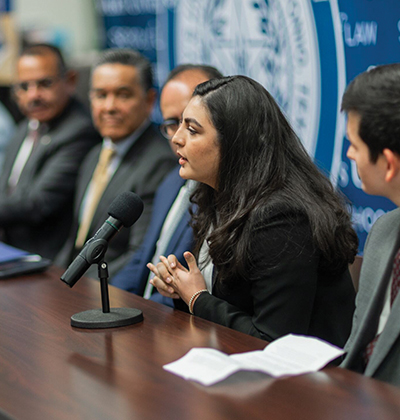
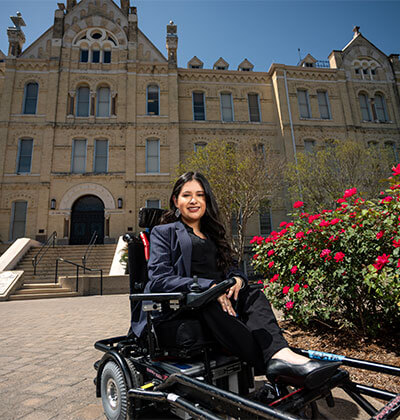
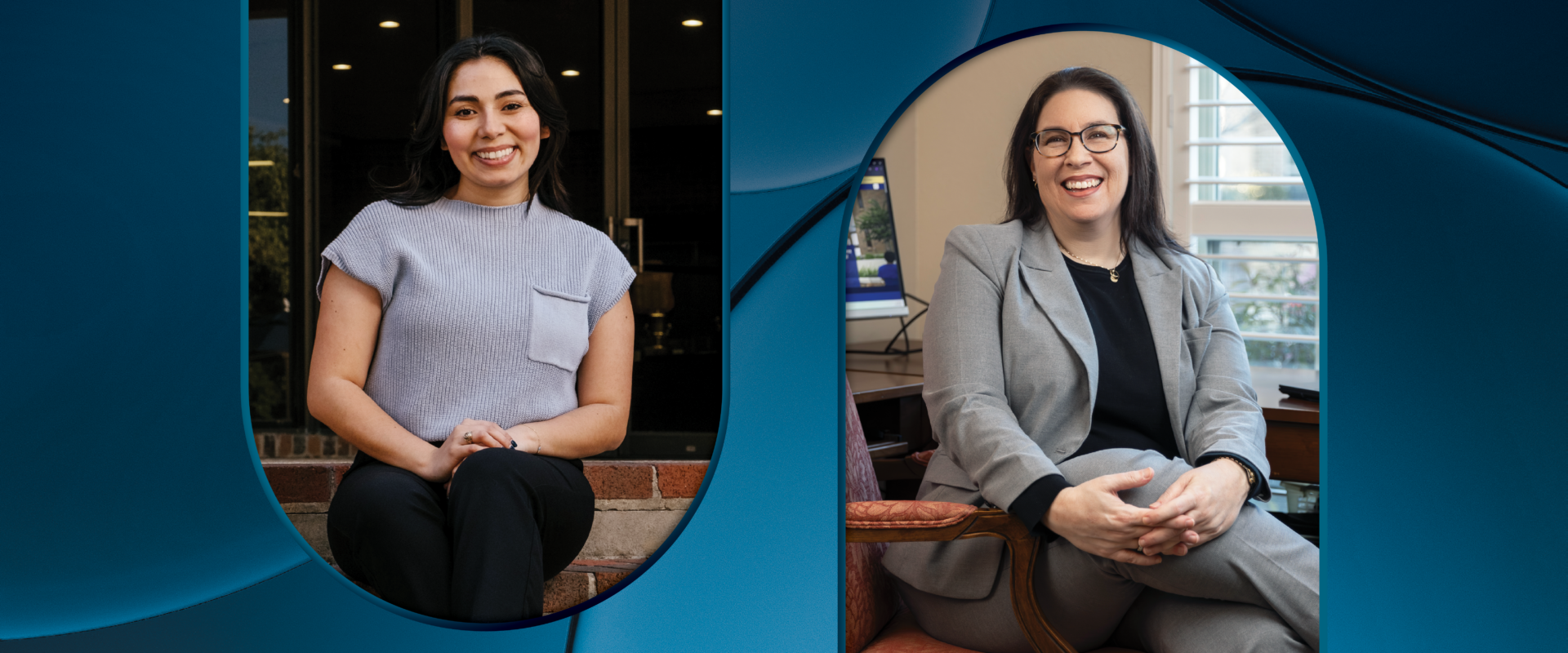
Two students — with vastly different backgrounds and interests — are members of the initial cohorts of the two dual-degree programs. Despite their differences, Melina Niño, a J.D./M.P.H. student, and Kara Horne, an M.L.S./M.P.H. student, share a dream of integrating legal training with public health education to address the evolving demands of both fields.

A native San Antonian, Niño studied biology before teaching chemistry and physics in Houston as a Teach for America Fellow. The experience led her to consider a career in law as she gained a firsthand understanding of the structural inequalities that limit academic access and achievement for children in underserved communities.
“This program was the perfect way for me to blend my background in science with my interest in public service in a way that will allow me to make systemic changes by shaping Texas policy,” said Niño. “My ultimate goal is to be in a position where I can write and work on policy that will make a real difference for people like my former students.”
After completing one semester of the program, Niño has been struck by how seamlessly the two fields intersect, and she already feels better equipped to pursue a career dedicated to serving the common good.
“This program has really opened doors for me,” Niño said. “It’s helped me to think in a broader sense of how to use law in practical ways to advocate for others and make a difference in equality.”
Increasing health care access
Horne, by contrast, is pursuing her M.L.S./M.P.H. after a 27-year career as a practicing clinician. Throughout her decades of experience in geriatric home health, she frequently witnessed patients unable to access the care they needed due to systemic, policy-related barriers.
“There’s a lot of fraud in home health all over the country,” Horne said. “I would often see patients who couldn’t access the care or equipment they needed because others were taking advantage of the system, which made me really passionate about the regulation and compliance side of the industry.”
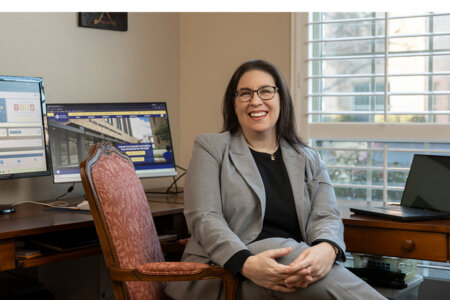
Last year, Horne transitioned from home health to her current role as a patient assessment standards coordinator at Encompass Health Dallas, where her focus is ensuring the accuracy and compliance of all documentation submitted to Medicare and other insurance providers. She’s completing the dual degree program virtually while balancing coursework with her full-time role.
“This combined degree is really going to help me take all of my clinical experience and apply it to make a significant impact on patients’ lives,” said Horne. “It’s a way for me to establish a well-rounded background that can shape health care access for the better.”
From novice to experienced
Niño and Horne’s distinct backgrounds and career experiences illustrate how the dual degree programs are intentionally designed to serve professionals at every stage — from early-career graduates to seasoned practitioners.
“Early-career students gain a powerful interdisciplinary foundation that distinguishes them in competitive fields, while mid-career professionals can translate lived experience into leadership,” said Shannon Sevier (J.D. ’07, M.P.A. ’21), Assistant Dean of Graduate Law Programs. “Graduates leave with the tools to ask better questions, anticipate regulatory challenges, and advocate for systems that are not only effective but just.”
“This program was the perfect way for me to blend my background in science with my interest in public service in a way that will allow me to make systemic changes by shaping Texas policy.”
— Melina Niño, J.D./M.P.H. student
Niño and Horne are just two examples of the students in the inaugural cohorts of the dual degree programs. By combining their legal education with public health training, perhaps one day these future advocates and policymakers will be able to address communitywide needs at the local, state and national level.
“Public health expertise is increasingly in demand at the state and local level,” said Genevieve Hébert Fajardo, J.D., Associate Dean for Academic Affairs. “This is the right moment for the St. Mary’s School of Law to launch a joint degree because of the growing recognition that legal systems and public health challenges are deeply interconnected.”