






St. Mary's University
A CATHOLIC AND MARIANIST LIBERAL ARTS INSTITUTION
School of Science, Engineering and Technology

Engineering

Graduates from the School of Science, Engineering and Technology are uniquely prepared to meet the challenges of these rapidly-advancing fields. In an integrated learning environment, students draw from science, philosophy, sociology and theology to analyze their findings in the laboratory, and in the community.

The mission of the Engineering Department is supportive of the mission of St. Mary's University to foster the formation of people in faith, dedicated to education, scholarship, and service. Each student is guided and encouraged to grow as a whole person, to develop intellectual capabilities and strong moral and ethical convictions, and to appreciate the value of community service.

A primary purpose of the department is to provide excellence and relevance in engineering education, research, and public service to enhance the quality of life and the well being of the citizens of the local and global communities. To promote excellence in engineering education, the students are taught to develop skills in critical thinking and quantitative analysis, encouraged to pursue research and other scholarly activities, trained to enhance their oral and written communication skills, and nurtured to become competent and socially responsible professionals.

The Engineering Department offers Robotics and Java Programming Summer Camps to high school students who are interested in learning robotics and Java programming. It is free for accepted students. For more information and application forms, please click here .

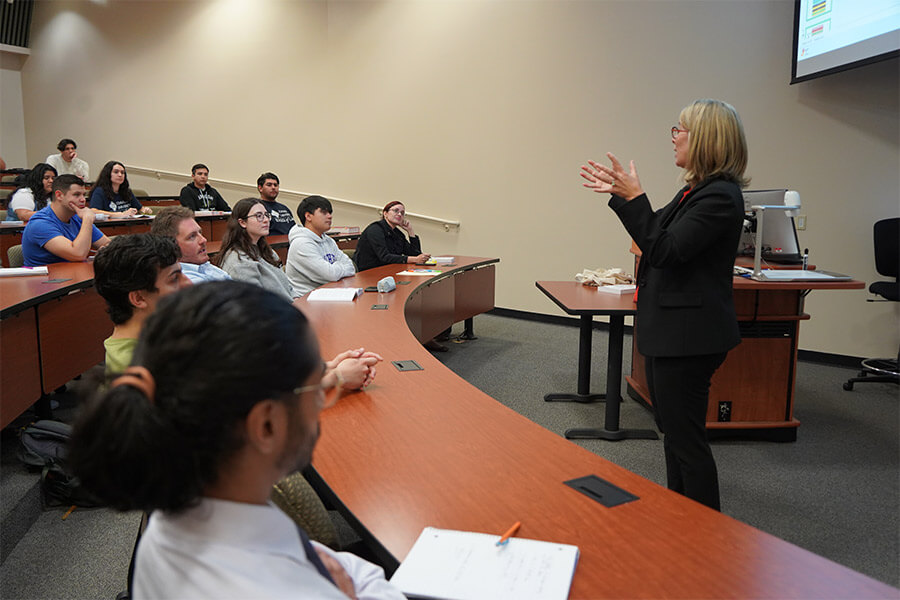
Each semester, the department hosts the Engineering Seminar Series which features thought-provoking lectures from a variety of experts in the field of engineering.See the brochure below for more information on this semester's speakers.


Educational Objectives

Based on the mission statements, the Engineering Criteria 2000, and the major needs of our constituency, the Program Educational Objectives (PEOs) of the Engineering Department are as follows:

To educate and train engineering graduates who successfully
  1. contribute to the missions of their organizations
  2. practice engineering and compete in the professional arena
  3. work independently, as a member of a group, or in a managerial position
  4. complete graduate education if they so desire
  5. become life-long scholars, pursue advance training, and remain abreast of and contribute to technical developments in their professions
  6. communicate and collaborate with professionals of varied backgrounds
  7. apply their professional knowledge responsibly and ethically
  8. contribute to their community
The Engineering Department offers six Bachelor of Science degrees at the undergraduate level. These are: Computer Engineering (CE), Electrical Engineering (EE), Engineering Management (EM), Engineering Science (ES), Industrial Engineering (IE), and Software Engineering and Computer Applications (SECA). The Department also offers a two-year pre-engineering program which incorporates the Texas State Coordinating Board's core curriculum.

Successful completion of the two-year curriculum makes students eligible for acceptance by other schools of engineering to which they may apply. Generally, the pre-engineering program addresses the needs of students who may be interested in pursuing degrees in areas that are not offered at St. Mary's.

Contact Information

For further information, please contact Bahman Rezaie, Ph.D., Chair and Professor of Engineering, at (210) 431-2051 or brezaie@stmarytx.edu

This link will probably just go to the grad nav link on the left. Placeholder for now.

Computer Engineering

Today, computers are used in all aspects of business, technology and education. They have become integral parts of automobiles, instrumentation for aeronautics and space exploration, medical devices, factory automation, artificial intelligence systems and telecommunications networks. Computer engineers gain their unique expertise from both the electrical engineering, and computer science disciplines.

The electrical engineering background integrates the theory and design of electronics hardware with the knowledge of electronic circuits and devices, digital logic, digital systems, microprocessors, embedded systems, hardware organization, and computer system architecture.

The computer science background includes software engineering, data structures, operating systems, database design, analysis and design of algorithms, and programming languages.

The computer engineering program at St. Mary's University successfully combines these two disciplines to prepare a new kind of engineer with a solid foundation that provides for the design of both electronic hardware and computer software.

Computer Engineering (B.S.): Accredited by the Engineering Accreditation Commission of ABET, http://www.abet.org

Contact Information

For further information, please contact Djaffer Ibaroudene, Ph.D., Undergraduate Program Director, at (210) 431-2050 or dibaroudene@stmarytx.edu

Computer Engineering Degree Plan

Every engineering senior completes a year-long design project, some of which have even been patented. Many engineering majors work as interns in local organizations such as Southwest Research Institute, The University of Texas Health Science Center, Motorola, and Harris Electronics.

Engineering students also participate in funded faculty research. Many junior and senior students volunteer their time to tutor freshman and sophomore students in mathematics and engineering courses.

To download the degree plan as a pdf file, click here .

Recommended Degree Timeline

First Year FallHours SpringHours
EG 1302 Programming for Engineers 3 EG 1305 OOP and Design 3
EN 1311 Rhetoric & Composition 3 EG 1301 Engineering Graphics 4
MT 2412 Univariate Calculus I 4 MT 2413 Univariate Calculus II3
PY 1404 Mechanics & Heat 4 PY 2404 Electricity & Magnetism4
SM 1301(H) Found. of Civilization3 SM 1311 Found. of Refection - Self3
Second Year FallHours SpringHours
CH 1401 General Chemistry I4 EG 2152 Circuit Analysis Lab (W) 1
EG 2141 Logic Design Lab (W) 1 EG 2342 Data Structure & Algorithms3
EG 2341 Logic Design 3 EG 2353 Circuit Analysis II3
EG 2352 Circuit Analysis I 3 EG 2382 Digital Systems Design 3
MT 3311 Differential Equations 3 SM 1312 Found. of Reflection - Nature3
MT 3323 Discrete Math 3 SM 2301 Found. of Practive - Ethics3
Third Year FallHours SpringHours
EG 2307 Engineering Mechanics 3 CS 3340 Software Engineering3
EG 3156 Electronics I Lab 1 EG 3157 Electronics II Lab1
EG 3356 Electronics I 3 EG 3357 Electronics II3
EG 3363 Microprocessors I 3 EG 3364 Microprocessors II 3
EG 3374 Computer Organization & Architecture 3 SM 2302 Found. of Practice - Civic Eng.3
SM 1313 Found. of Reflection - Others3 SM 1314 Found. of Reflection - God3
Fourth Year FallHours SpringHours
EG 4362 Senior Design Project I 3 CS 3350 Operating Systems 3
MT 4331 Probability & Statistics3 EG 3334 Engineering Economy 3
SM 2303 Found. of Practice - Fine Arts3 SM 4301 Sr. Des. Proj. II/Core Capstone3
SM 2304 Found. of Practice - Literature3 EG 4356 Computer Networking 3
Technical Elective3 TH 33xx Theology3
Total 129
Electives
CS 3311 Compilers MT 3324 Linear Algebra
CS 3335 Survey of Programming Languages EG 3392 Java and Applications
CS 4325 Computer Graphics EG 3372 Signals & Systems
CS 4315 Artificial Intelligence EG 4370 Communication
CS 4320 Files & Databases EG 4369 Control Systems
MT 3315 Advanced Math of EE EG 4337 Computer Simulation

Electrical Engineering

The electrical engineering program at St. Mary's University is best known for its high academic standards and innovative student projects. Every engineering senior completes a year-long design project, some of which have even been patented. The curriculum emphasizes new research findings and industry advances, including computer-aided design tools.

Students become well-versed in science and mathematics; current and relevant technical knowledge; extensive, practical hands-on experience in laboratories; and the opportunity to participate in faculty research projects.

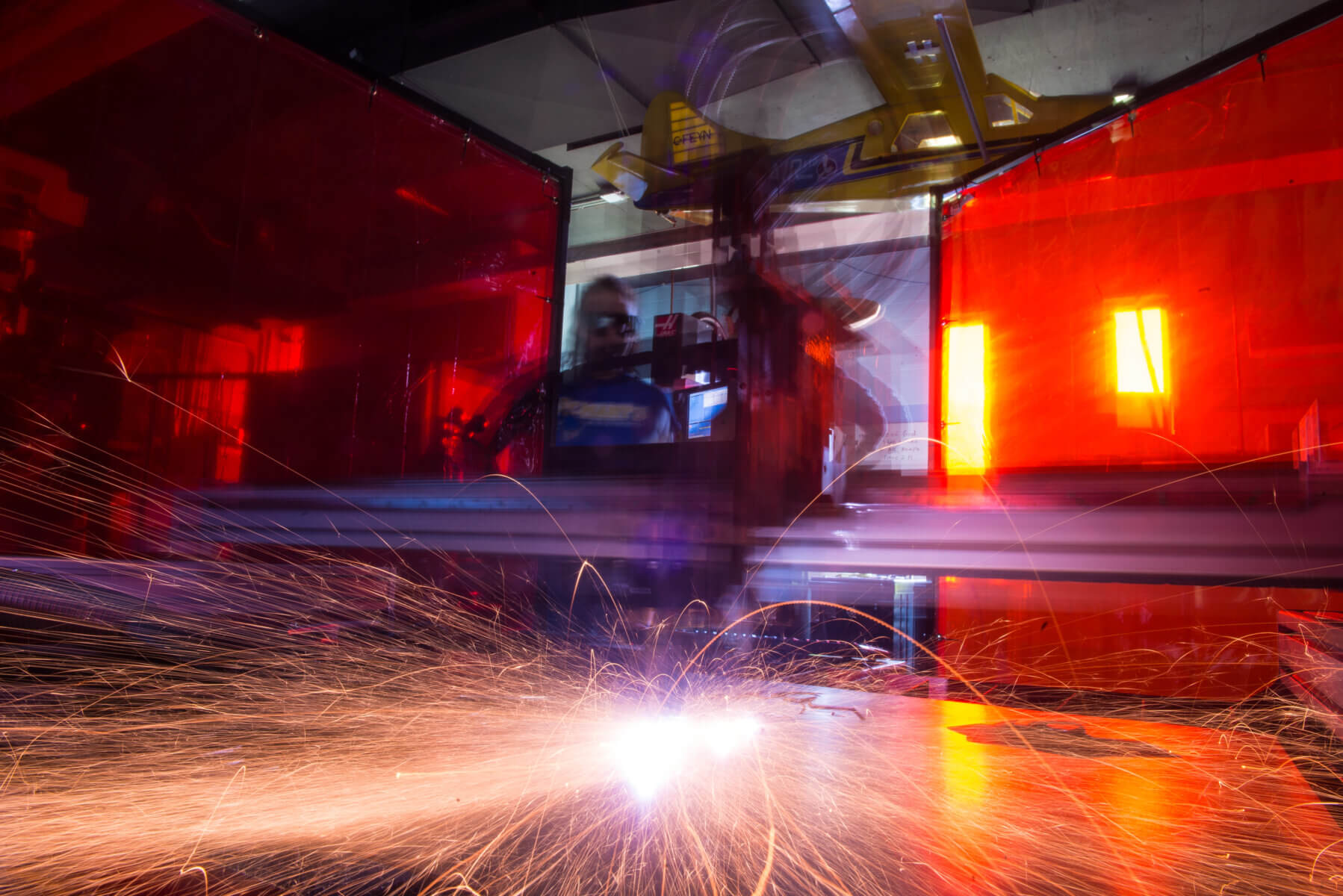
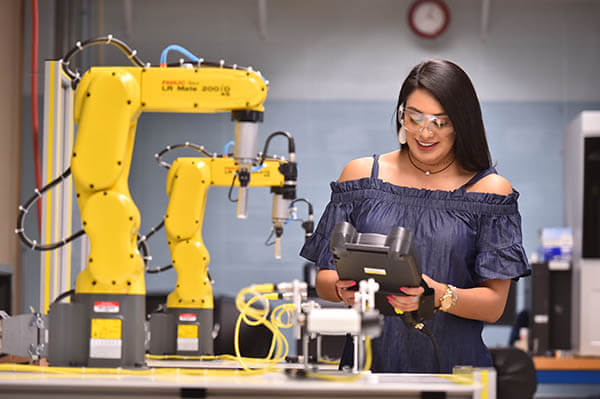
Unique facilities available to electrical engineering students include an electrical engineering laboratory accessible 24-hours a day; an energy conversion laboratory for motors, generators and transformers; a manufacturing and robotics laboratory; and a research laboratory equipped with both UNIX and Windows workstations.

Electrical Engineering (B.S.): Accredited by the Engineering Accreditation Commission of ABET, http://www.abet.org

Contact Information

For further information, please contact Djaffer Ibaroudene, Ph.D., Undergraduate Program Director, at (210) 431-2050 or dibaroudene@stmarytx.edu

Electrical Engineering Degree Plan

Many electrical engineering majors work as interns in local organizations such as Southwest Research Institute, The University of Texas Health Science Center, Motorola, NASA, City Public Service, and Harris Electronics.

Engineering students also participate in funded faculty research. Many junior and senior students volunteer their time to tutor freshman and sophomore students in mathematics and engineering courses. Students participate in the student chapters of IEEE and IIE, professional societies for electrical engineers and industrial engineers, respectively. Activities of these chapters include invited lecturers, industrial plant tours, fund raising, and student-mentor programs.

To download the degree plan as a pdf file, click here.

Recommended Degree Timeline

First Year FallHours SpringHours
EG 1101 Introduction to EE I1 EG 1102 Introduction to EE II1
EG 1302 Programming for Engineers 3 EG 1301 Engineering Graphics 3
EN 1311 Rhetoric & Composition 3 MT 2413 Univariate Calculus II 4
MT 2412 Univariate Calculus I4 PY 2404 Electricity & Magnetism4
PY 1404 Mechanics & Heat 4 SM 1311 Found. of Reflection - Self3
SM 1301(H) Foundation of Civilization3 SM 1312 Found. of Reflection - Nature3
Second Year FallHours SpringHours
EG 2141 Logic Design Lab (W) 1 EG 2152 Circuit Analysis Lab (W) 1
EG 2307 Engineering Mechanics 3 EG 2353 Circuit Analysis II 3
EG 2341 Logic Design 3 MT 3315 Advanced Engineering Math 3
EG 2352 Circuit Analysis I 3 SM 1314 Found. of Reflection - God3
MT 3311 Differential Equations 3 SM 2301 Found. of Practice - Ethics3
SM 1313 Found. of Reflection - Others3 SM 2303 Found. of Practice - Fine Arts3
Third Year FallHours SpringHours
CH 1401 General Chemistry I 4 EG 3157 Electronics II Lab (W) 1
EG 3156 Electronics I Lab (W) 1 EG 3357 Electronics II 3
EG 3356 Electronics I 3 EG 3364 Microprocessors II 3
EG 3363 Microprocessors I 3 EG 3366 E & M Theory 3
EG 3372 Signals & Systems 3 EG 4350 Digital Signal Processing 3
MT 4331 Probability & Statistics3 SM 2302 Found. of Practice - Social Sc.3
Fourth Year FallHours SpringHours
EG 4360 Energy Conversion 3 EG 3334 Engineering Economy 3
EG 4362 Senior Design Project I 3 EG 3368 Semiconductor Devices 3
EG 4366 Advanced Electronics Design 3 EG 4160 Energy Conversion Lab (W) 1
EG 4369 Control Systems 3 EG 4166 Advanced Electronics Design Lab (W) 1
SM 2304 Found. of Practice - Literature3 SM 4301 Sr. Des. Proj. II/Core Capstone3
TH 33xx Theological Themes3 EG 4370 Communications Theory 3
Total 133

Engineering Management

Successful engineering managers in manufacturing, the military, or other industries use powerful analytic metrics and methods to solve complex problems.

The engineering management program at St. Mary's University provides an opportunity for future engineers and scientists to enhance their knowledge in the area of scientific management. Graduates apply their skills in engineering management to solve problems; assess an engineering management study; and lead decision-making processes.

Unique facilities available to engineering management students include an electrical engineering laboratory accessible 24-hours a day; an energy conversion laboratory for motors, generators and transformers; a manufacturing and robotics laboratory; and a research laboratory equipped with both UNIX and Windows workstations.

Contact Information

For further information, please contact Rafael Moras, Ph.D., Undergraduate Program Director, at (210) 431-2017 or rmoras@stmarytx.edu

Engineering Management Degree Plan

Many engineering majors work as interns at local organizations such as Southwest Research Institute, Phillips, Luxotica, USAA, Motorola, City Public Service and Harris Electronics. Engineering students also participate in funded faculty research. Many junior and senior students volunteer their time to tutor freshman and sophomore students in mathematics and engineering courses.

Every engineering senior also completes a year-long design project, some of which have even been patented. Students also participate in the student chapter of the Institute of Industrial Engineers (IIE), a professional society for industrial engineers.

To download the degree plan as a pdf file, click here .

Recommended Degree Timeline

First Year FallHours SpringHours
EG 1302 Programming for Engineers 3 EG 1301 Engineering Graphics 3
EN 1311 Rhetoric & Composition 3 MT 2413 Univariate Calculus II 4
MT 2412 Univariate Calculus I 4 PY 2404 Electricity & Magnetism 4
PY 1404 Mechanics & Heat 4 SM 1311 Found of Reflection - Self3
SM 1301(H) Found of Civilization3 SM 1312 Found of Reflection - Nature3
Second Year FallHours Spring Hours
AC 2310 Accounting I 3 AC 2320 Accounting II3
EG 2307 Engineering Mechanics 3 SM 2301 Found of Practice - Self3
SM 1313 Found of Reflection - Others3 SM 2302 Found of Practice - Civic3
SM 1314 Found of Reflection - God3 SM 2303 Found of Practice - Fine Arts3
EG Block #13EG Block #23
Third Year FallHours SpringHours
MT 4331 Probability & Statistics 3 SM 2304 Found of Practice - Literature3
FN 3310 Corporate Finance 3 TH 33xx Theology Themes3
EG 3345 Circuits & Systems 3 MK 3310 Principles of Marketing3
EG 4330 Six-Sigma Quality3 MN 3330 Org Behavior3
BA Block #13 EG 3145 Circuits & Systems Lab 1
BA Block #23
Fourth Year FallHours SpringHours
EG 4340 Senior Design Project I 3 EG 3334 Engineering Economy 3
QM 3340 Management Bus. Projects3 SM 4301 Sr. Des. Proj. II/Core Capstone3
MN 3320 Comm. in Management3 BA Block #33
EG 3333 Lean Production3 EG Block #33
Foreign Language I 3 Foreign Language II3
Total 125

EG Block Options: Students will choose 9-10 hours from EG2322, 3335, 3336, 4337, 4331, 4332, 4332 lab
BA Block Options: Students will choose 9 hours from the following, with no more than six hours from any one area.

  • Accounting - 3310, 3320, 3341, 4306, 4350, 4360
  • Finance - 3330, 3340, 4320, 4360, 4380
  • Entrepreneurial Studies - 4100, 4110, 4120, 4130, 4140, 4150, 4160, 4170, 4180, 4190, 4195, 4391, 4396
  • Information System Management - 3342, 3360, 4340
  • Marketing - 3340, 3370, 3380, 4300, 4320
  • Management - 3360 (Leadership), 3380 (Innovation), 4300 (Topics), 4330 (neg/confilict), 4360 (Dec. Making), 4370 (service man)
  • International Business - 3321W and 4351, 4352, 4355, 4358, 436x, 4372

Engineering Science

Engineering science at St. Mary's University provides greater flexibility than traditional programs, especially in choosing engineering electives, so that students gain a tailored education.

The program prepares students to pursue careers in multidisciplinary fields such as biomedical engineering, environmental engineering, materials sciences, pre-medicine, or other secondary areas. Engineering science is the only engineering program that allows the student to have a minor in a variety of areas. Every engineering senior also completes a year-long design project, some of which have even been patented.

In addition to the major in engineering science, there are two concentrations available: pre-medical science and environmental science. Please see the degree plans for specifics within each of these concentrations.

Unique facilities available to engineering science students include an electrical engineering laboratory accessible 24-hours a day; an energy conversion laboratory for motors, generators and transformers; a manufacturing and robotics laboratory; and a research laboratory equipped with both UNIX and Windows workstations.

Contact Information

For further information, please contact Bahman Rezaie, Ph.D., Chair and Professor of Engineering, at (210) 431-2051 or brezaie@stmarytx.edu

Engineering Science Degree Plan

Many engineering science majors work as interns in local organizations such as Southwest Research Institute, The University of Texas Health Science Center, USAA, VLSI Technology and Harris Electronics.

Engineering students also participate in funded faculty research. Many junior and senior students volunteer their time to tutor freshman and sophomore students in mathematics and engineering courses.

To download the degree plan as a pdf file in Engineering Science, click here .

To download the degree plan as a pdf file in Engineering Science with concentration in Environmental Sciences, click here .

To download the degree plan as a pdf file in Engineering Science with concentration in Pre-MED, click here .

To download the degree plan as a pdf file in Engineering Science with concentration in Chemistry, click here .

To download the degree plan as a pdf file in Engineering Science with concentration in Mathematics, click here .

Recommended Degree Timeline

First Year FallHours SpringHours
EG 1302 Programming for Engineers 3 EG 1301 Engineering Graphics 3
EN 1311 Rhetoric & Composition 3 MT 2413 Univariate Calculus II4
MT 2412 Univariate Calculus I 4 PY 2404 Electricity & Magnetism4
PY 1404 Mechanics & Heat4 SM 1311 Found of Reflection - Self3
SM 1301(H) Found of Civilization3 SM 1312 Found of Reflection - Nature3
Second Year FallHours SpringHours
CH 1401 General Chemistry I4 CH 1402 General Chemistry II4
EG 2307 Engineering Mechanics 3 EG 2308 Strength of Materials 3
MT 3311 Differential Equations 3 SM 2303 Found of Practice - Fine Arts3
SM 1313 Found of Reflection - Others3 SM 1314 Found of Reflection - God3
Engineering Science Elective #13 Engineering Science Elective #23
Third Year FallHours SpringHours
EG 3345 Circuits & Systems 3 EG 3145 Circuits & Systems Lab1
MT 4331 Probability & Statistics 3 EG 2306 Materials Science3
Foreign Language I3 Foreign Language II3
SM 2302 Found of Practice - Civic Eng.3 SM 2301 Found of Practice - Ethics3
Engineering Science Elective #33 TH 33xx Theology Themes3
Engineering Science Elective #43
Fourth Year FallHours SpringHours
EG 3335 Operations Research I 3 EG 2309 Fluid Mechanics3
EG 4395 Senior Design Project I3 EG 3334 Engineering Economy3
SM 2304 Found of Practice - Literature3 SM 4301 Sr. Des. Proj. II/Core Capstone3
Engineering Science Elective #53 Engineering Science Elective #73
Engineering Science Elective #63 Engineering Science Elective #83
Total 127

Industrial Engineering

Industrial engineering students at St. Mary's University are trained as productivity and quality enhancement specialists. The industrial engineering program combines science, mathematics, and engineering coursework with laboratories and classes in communications, English, and other humanities and social sciences.

The same techniques used by industrial engineers in the production and manufacturing arenas can be used to improve quality in service industries. Industrial engineers are concerned with improving the interaction between humans and our equipment. They are experts when it comes to saving money and improving the workplace for fellow workers.

They may be found shortening production times, streamlining a hospital operating room, designing a comfortable workstation, distributing products worldwide, or manufacturing superior cars.

Industrial Engineering (B.S.): Accredited by the Engineering Accreditation Commission of ABET, http://www.abet.org

Contact Information

For further information, please contact Rafael Moras, Ph.D., Undergraduate Program Director, at (210) 431-2017 or rmoras@stmarytx.edu

Industrial Engineering Degree Plan

Every engineering senior completes a year-long design project, some of which have even been patented. Engineering students also participate in funded faculty research. Many junior and senior students volunteer their time to tutor freshman and sophomore students in mathematics and engineering courses.

Unique facilities available to industrial engineering students include an electrical engineering laboratory accessible 24-hours a day; an energy conversion laboratory for motors, generators and transformers; a manufacturing and robotics laboratory; and a research laboratory equipped with both UNIX and Windows workstations. Students also participate in the student chapter of the Institute of Industrial Engineers (IIE), a professional society for industrial engineers.

To download the degree plan as a pdf file, click here.

Recommended Degree Timeline

First Year FallHours SpringHours
EG 1302 Programming for Engineers3 EG 1301 Engineering Graphics3
EN 1311 Rhetoric & Composition 3 MT 2413 Univariate Calculus II3
MT 2412 Univariate Calculus I 4 PY 2404 Electricity & Magnetism4
PY 1404 Mechanics & Heat4 SM 1311 Found of Reflection - Self4
SM 1301(H) Found of Civilization3 SM 1312 Found of Reflection - Nature3
Second Year FallHours SpringHours
CH 1401 General Chemistry I4 EG 2306 Materials Science 3
EG 2307 Engineering Mechanics 3 EG 2325 Ind. Automation & Control 3
EG 2322 Work Design & Measurement 3 SM 1313 Found of Reflection - Others3
MT 3311 Differential Equations 3 SM 2301 Found of Practice - Ethics3
SM 1314 Found of Reflection - God3 Technical Elective*3
Third Year FallHours SpringHours
EG 3335 Optimization3 EG 3145 Circuits & Systems Lab 1
EG 3345 Circuits & Systems I 3 EG 3316 Human Factors 3
EG 4330 Six Sigma Quality3 EG 3336 Applied Optimization & Anal.3
EG 3333 Lean Production Systems3 SM 2303 Found. of Practice - Fine Arts3
MT 4331 Probability & Statistics I3 SM 2302 Found. of Practice - Civic3
MT 4332 Probability & Stats II3
Fourth Year FallHours SpringHours
EG 3337 Supply Chain Management3 EG 3334 Engineering Economy 3
EG 4331 Manufacturing Processes 3 EG 4132 CAM & Robotics Lab 1
EG 4340 Senior Design Project I 3 EG 4332 CAM & Robotics 3
SM 2304 Found. of Practice - Literature3 EG 4337 Computer Simulation 3
TH 33xx Theology3 SM 4301 Sr. Des. Proj. II/Core Capstone3
Total 124

*Choose from EG 2309 Fluid Mechanics, or EG 2308 Strength of Materials

Software Engineering

The software engineering program at St. Mary's University helps students gain the insight and skills necessary to develop large-scale, practical software systems. Graduates are uniquely prepared for a competitive job market with a diverse background in computer graphics, database management, computer aided design and manufacturing, computer architecture, computer simulation, microprocessors and artificial intelligence.

Students are prepared to manage the software development process, analyze customer specifications, design reliable solutions, and produce high-quality software systems that meet budgetary constraints and delivery deadlines.

The program is designed to provide students with technical skills in software project management, specification and requirement analysis, design methodologies, testing, maintenance and re-engineering, quality assurance and configuration management.

Contact Information

For further information, please contact Djaffer Ibaroudene, Ph.D., Undergraduate Program Director, at (210) 431-2050 or dibaroudene@stmarytx.edu

Software Engineering Degree Plan

In the software engineering program, all laboratories are taught by department faculty members, and strong advising and mentoring processes are in place throughout the students' course of study. Every engineering senior also completes a year-long design project, some of which have even been patented.

To download the degree plan as a pdf file, click here.

Recommended Degree Timeline

First Year FallHours SpringHours
EG 1302 Programming for Engineers 3 EG 1301 Engineering Graphics 3
EN 1311 Rhetoric & Composition 3 EG 1305 OOP and Design 3
MT 2412 Univariate Calculus I 4 MT 2413 Univariate Calculus II4
PY 1404 Mechanics & Heat4 PY 2404 Electricity & Magnetism4
SM 1301(H) Foundation of Civilization3 SM 1312 Found. of Reflection - Nature3
Second Year FallHours SpringHours
CS 3340 Software Engineering3 EG 2342 Data Structure & Algorithms3
EG 2307 Engineering Mechanics3 EG 2310 Human Computer Interaction3
EG 3392 Java and Applications3 EG 2311 Soft. Requirement Engineering3
MT 3323 Discrete Mathematics 3 SM 1314 Found. of Reflection - God3
SM 1311 Found. of Reflecton - Self3 SM 2301 Found. of Practice - Ethics3
Foreign Language I 3 Foreign Language II3
Third Year FallHours SpringHours
CH 1401 General Chemistry I4 CS 3350 Operating Systems 3
EG 3374 Computer Organization & Architecture3 CS 4320 Files & Databases3
EG 3350 Soft. Design & Architecture3 EG 3334 Engineering Economy 3
SM 2304 Found. of Practice - Literature3 SM 2302 Found. of Practice - Social Sc.3
SM 1313 Found. of Reflection - Others3 TH 33xx Theological Themes3
Fourth Year FallHours SpringHours
EG 3351 Soft. Project Management3 EG 4351 Formal Methods in Soft. Eng3
EG 3352 Soft Quality Assure & Testing3 EG 4352 Soft Maintenance & Evolution3
EG 4362 Senior Design Project I 3 EG 4356 Computer Networking3
MT 4331 Probability & Statistics I3 SM 4301 Sr. Des. Proj. II/Core Capstone3
SM 2303 Found. of Practice - Fine Arts3
Total 128

Senior Design Projects

Ever year St. Mary's graduating engineering students present their final senior design projects to faculty, family, friends and peers. The final presentations are judged by faculty and industrial panelists.

The senior design project is a comprehensive effort that involves proposal preparation, preliminary and detailed design, a professional report, and a final presentation. The project is one of the most valuable components of the St. Mary's engineering experience.

Here are some of the engineering senior design projects in recent years.

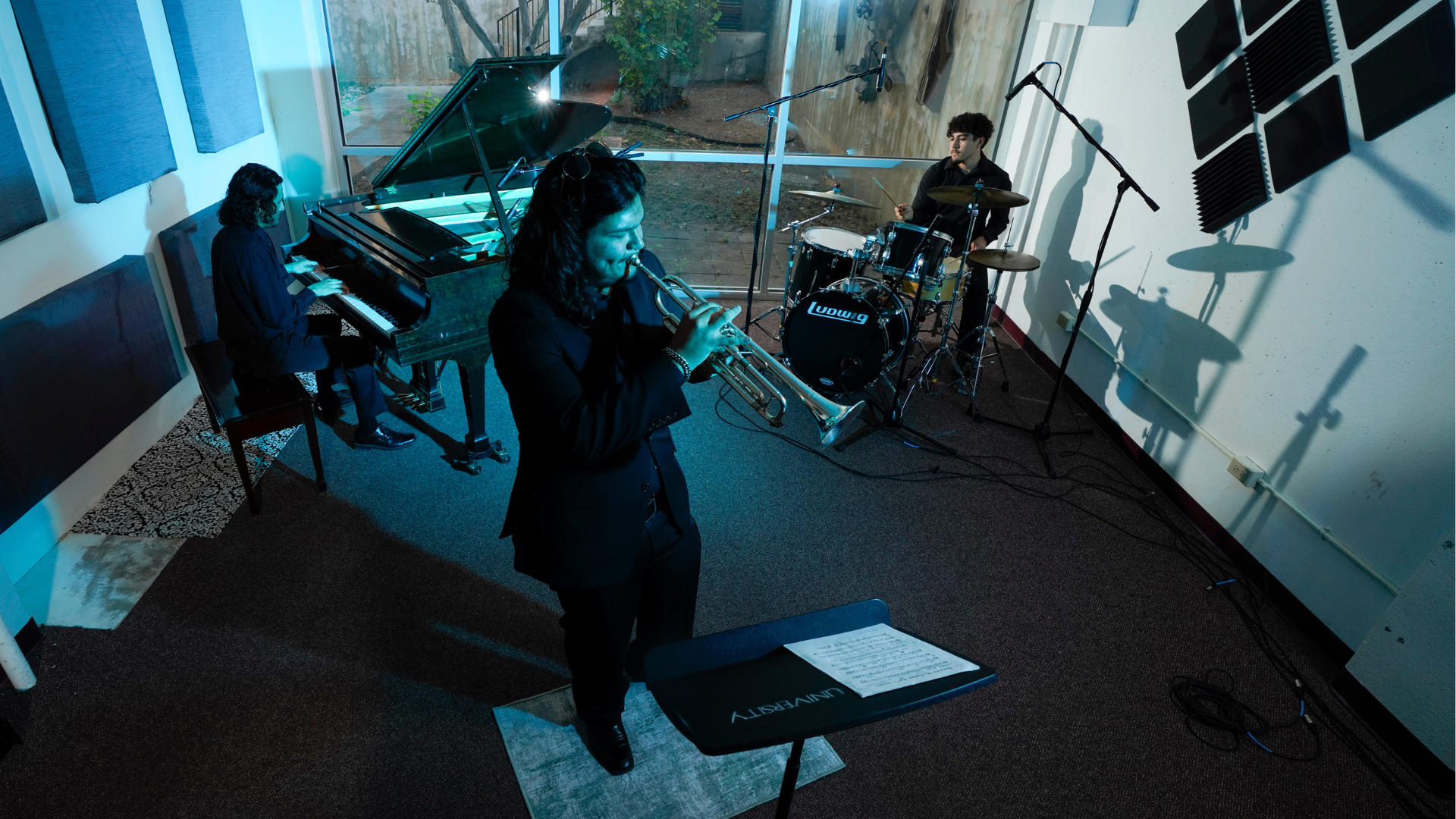
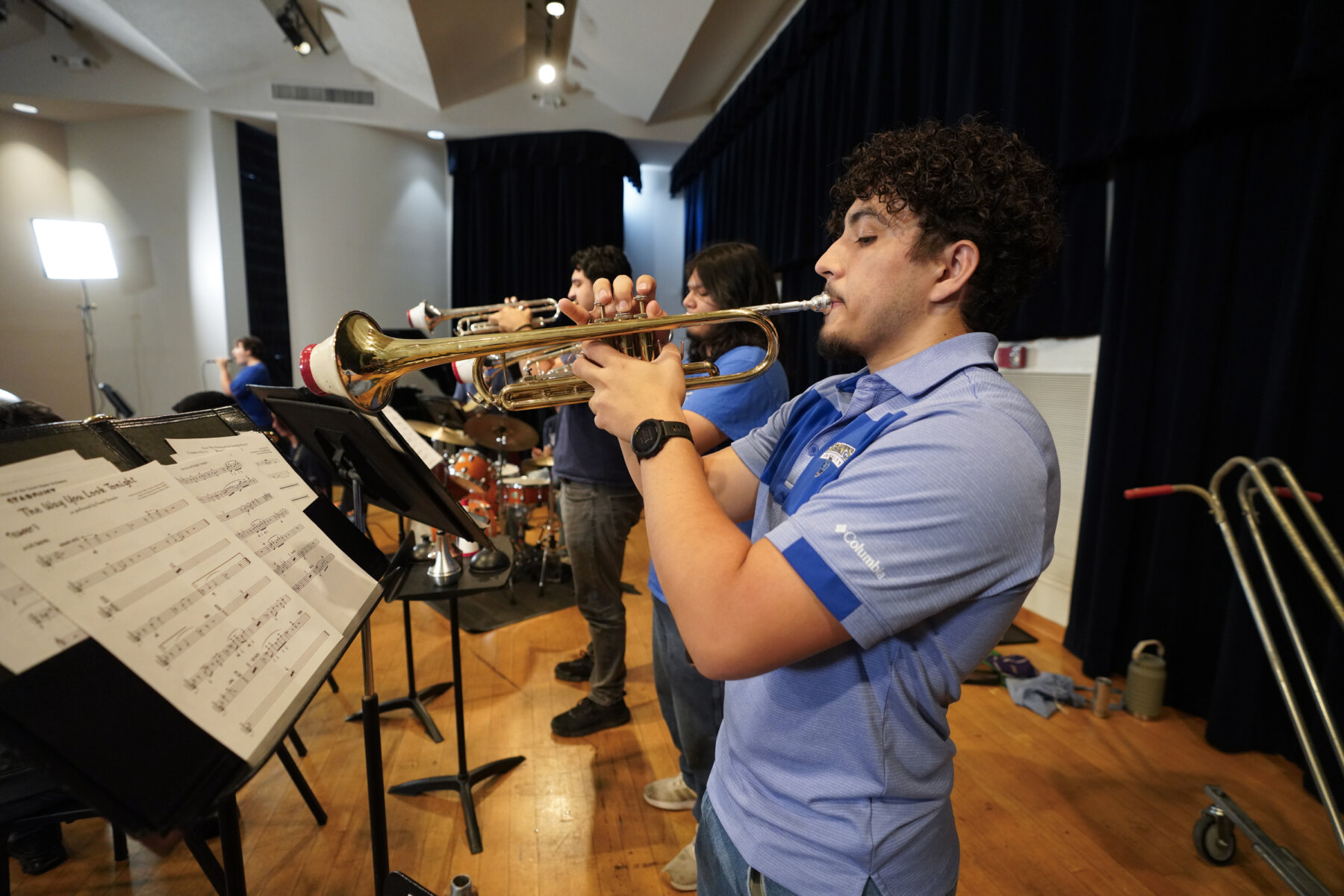
1. Electronically Assisted Trumpet


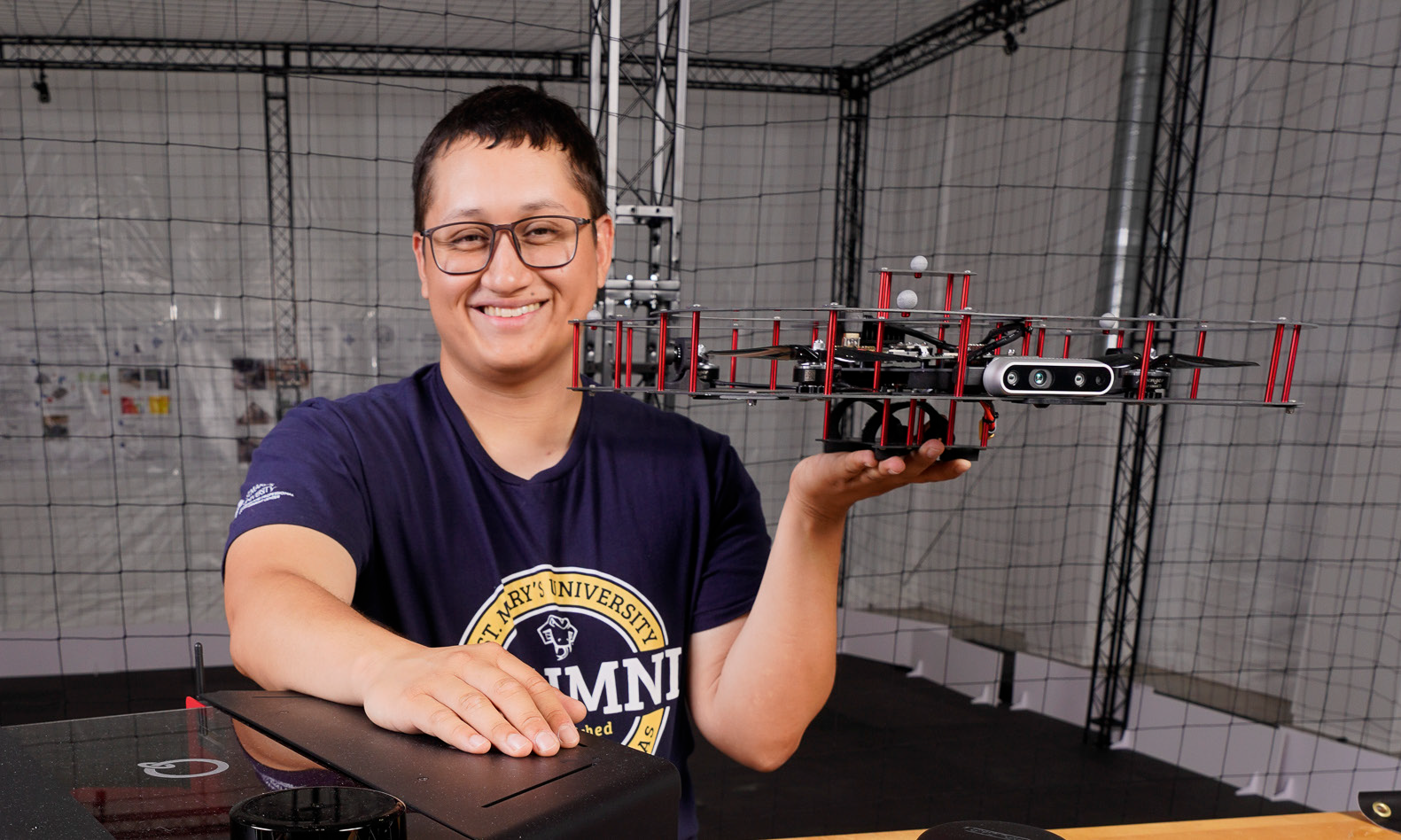
2. Robot following Eye Movement


Click here for more senior design projects >>>

Faculty and Staff

The School of Science, Engineering and Technology prides itself on its celebrated faculty members, 100 percent of whom hold terminal degrees. Instead of learning from graduate assistants, students are taught by experienced industry professionals and scholars.

These professors bring real-world application to the study of science by sharing their expertise on subjects such as space colonization, electrical engineering, computer game development, chemistry, statistics, and search engine optimization.

Professors have also received acclaimed grants such as the Grant for Education and Outreach for San Antonio Area Foundation, and the Computational Modeling of Laser-Cell Biochemical Interactions from the U.S. Air Force.

The Engineering Department was founded in 1958 by Dr. Turgut M. Ozan.

Ozgur Aktunc, Ph.D.

Assistant Professor of Computer Engineering
Office: Richter 218
Phone: (210) 431-2052
oaktunc@stmarytx.edu

Full Bio Details

B.S., Istanbul Technical University, 1999
M.S., The University of Alabama at Birmingham, 2002
Ph.D., The University of Alabama at Birmingham, 2007

Research areas of interest:
  • Software Engineering
  • Component-based development
  • Software Metrics
  • Information Theory

Mehran Aminian, Ph.D.

Professor of Electrical Engineering
Office: Richter 219
Phone: (210) 431-2047
maminian@stmarytx.edu

Full Bio Details
B.S., Sari College (Iran), 1978
M.S., University of Oklahoma, 1982
Ph.D., University of Oklahoma, 1989

Mehran Aminian, Ph.D. joined St. Mary's University in 1988 after graduating from University of Oklahoma with a doctorate in Electrical Engineering. His areas of interest include Computational Intelligence, Optical Communication, Quantum Electronics, Quantum Computing, Quantum Mechanics, Quantum Collision Theory and Semiconductor Devices. He teaches a variety of electrical engineering courses such as Electronics, Semiconductor Devices, Communication Theory, Neural Networks, Optical Communication, Senior Design Project, Electromagnetic Wave Theory, Circuit Theory, Signals and Systems, etc.

He has published numerous papers in Journals such as Physical Review A, Journal of Physics B, IEEE Transactions, Journal of Electronic Testing Theory and Application. He has served in numerous committees such as Campus Technology Committee, Campus Safety Committee, Tenure and Promotion Committees, etc.

Gopalakrishnan Easwaran, Ph.D.

Associate Professor of Industrial Engineering
Office: Richter 234
Phone: (210) 436-3038
geaswaran@stmarytx.edu

Full Bio Details

B.E., PSG Tech, Bharathiar University (Coimbatore, India), 2000
M.S., Texas A&M University, 2003
Ph.D., Texas A&M University, 2008

Gopalakrishnan Easwaran, Ph.D., has a bachelor's degree in mechanical engineering (sandwich program) from PSG College of Technology. He earned a master's degree and his doctorate in industrial and systems engineering. His research interests include supply chain management, applied optimization, ERP & business intelligence systems, scheduling and sequencing.

Easwaran has industry experience from consultancy research projects for a variety of firms including PSG Industrial Institute (India), Hindustan Aeronautics Limited (India), Defence Research and Development Lab (India), Master Halco, Frito-Lay, and PepsiCo. He has published papers in journals such as Interfaces, Naval Research Logistics, and Transportation Science.


Vahid Emamian, Ph.D.

Associate Professor of Electrical Engineering
Office: Richter 223
Phone: (210) 431-2049
vemamian@stmarytx.edu

Full Bio Details


B.S., Sharif University of Technology, Tehran, 1995
M.S., Sharif University of Technology, Tehran, 1997
Ph.D., University of Minnesota, 2003

Vahid Emamian received his bachelor's and master's in Electrical Engineering from Sharif University of Technology in Tehran in 1995 and 1997, respectively, and his Ph.D from University of Minnesota in Electrical and Computer Engineering, in 2003. The focus of his Ph.D. thesis was “collaborative communications for cellular wireless systems.” He then joined St. Mary's University in 2003 as an Assistant Professor of Engineering, and was elevated to Associate Professor position in 2008.

Emamian teaches an undergraduate course, Circuit Analysis I, in addition to many graduate level courses: Wireless Communications, Automatic Control Systems, Digital Control, Data Acquisition, Presentation, and Analysis, and Engineering Problem Solving Using Matlab. He established a Control and Data Acquisition lab using a grant from Education Department, and a Wireless Communications lab using a grant from the Department of Defense. He is a Senior Member of IEEE reviews papers for IEEE journals. Emamian has published more than 10 journal and conference papers. He has been an associated editor of the International Journal of Computers and Electrical Engineering since 2007.

Irwin S. Goldberg, Ph.D., P.E.

Professor of Electrical Engineering
Office: Richter 235
Phone: (210) 436-3859
igoldberg@stmarytx.edu

Full Bio Details

B.S., Drexel University, 1963
M.S., Lehigh University, 1965
Ph.D., Lehigh University, 1970

Irwin Goldberg has a bachelor's in Electrical Engineering and master's and doctoral degrees in Physics . His Ph.D. thesis involved mathematical physics as related to problems in elastic wave propagation. He had further training as a Postdoctoral Fellow in Biomedical Engineering at the University of Illinois Medical Center at Chicago and as a Postdoctoral Fellow in Biophysics at the University of Chicago.

He was the Director of the Analog Computing and Simulation Laboratory for the Division of Biological Sciences and Medicine at the University of Chicago, within the Department of Radiology. There he developed mathematical models involving blood flow in arteries, air flow in lungs, deposition of aerosol particles in the lungs, anesthetic drug uptake and biochemical kinetics.

He came to St. Mary’s University in 1980 as an Associate Professor with joint appointments in the Departments of Physics and Engineering. Goldberg worked with other members of the Engineering Department to get ABET accreditation for the Electrical Engineering Program. He has taught 24 courses in the Physics, Mathematics, and Engineering Departments at St. Mary's University. He is currently a Full Professor of Engineering.

He spent summers as a participant in Navy-ASEE Summer Faculty Research Program the Naval Undersea Warfare Center (NUWC) in Newport, Rhode Island, a participant in Air Force O.S.R. Grant, a researcher participant in the Department of Anesthesiology, University of Texas Health Science Center at San Antonio, and as a researcher at US Army Research Center, Aberdeen Proving Grounds, Maryland. In the 2006-2007 academic year, he was awarded a grant to conduct research with the U.S. Air Force Laser Radiation Laboratory in San Antonio.

His areas of research include mathematical modeling of wave propagation, aerosol particle mechanics, fluid dynamics, elasticity theory, biomathematics, and engineering education. He published 16 research papers in refereed journals, ten of these since coming to St. Mary's. He has served as a referee/reviewer for Mathematical Biosciences, Journal of Fluid Mechanics, IEEE Transactions on Education, and ASME Journal of Biomechanical Engineering.

Djaffer Ibaroudene, Ph.D.

Professor of Computer Engineering
Office: Richter 237
Phone: (210) 431-2050
dibaroudene@stmarytx.edu

Full Bio Details

B.S., University of Bridgeport, 1981
M.S., State University of New York at Buffalo, 1985
Ph.D., State University of New York at Buffalo, 1991

Djaffer Ibaroudene, Ph.D., specializes is in computer engineering. He has taught a variety of courses, including Programming for Engineers, Fundamentals of Logic Design, Digital Systems using VHDL, Microprocessors, Computer Architecture, Parallel Processing, Computer Networking, and Software Engineering. His early research work focused on developing parallel algorithms for 3-D image representation, manipulation and display. His current research interest is in the broad field of computer architecture, parallel processing and computer networking.

Ibaroudene is a Co-PI on a $149,966.00 grant entitled “Building a High Performance Linux Cluster Laboratory for Advanced Computing” from the Army High Performance Computing Research Center. The goal of the grant is to create a Linux cluster laboratory that would provide the infrastructure for innovative teaching and collaborative research in high performance and advanced computing at the undergraduate and graduate levels at St. Mary’ University. The grant covers the time from June 1, 2010 to May 31, 2011.

He also received multiple hardware and software grants totaling in excess of $162,000 from Altera Corporation from 1998 to 2010. In addition, he received 10 Intel IXP 1200 Network Processor Development Systems from Intel Corporation, valued at $27,500.

In the summers of 1997 and 1998, Ibaroudene worked as a consultant with GRC International Inc., Montgomery, Alabama. He participated in the data modeling task orders to build a shared data store for the Civil Engineering, Logistics Module (LOGMOD), and the Cargo Movement Operation System (CMOS) prototype as part of a larger effort to modernize various computer applications and create a shared data environment for the Air Force Global Command and Support System (GCSS).

He also worked as a consultant with the Engine and Vehicle Research Division at Southwest Research Institute in San Antonio during the summer of 1996, during which he helped develop the firmware for an M68HC11 micro-controller-based system that controls the ignition of a diesel engine.

In spring 1994, he served as a consultant on an NIH-funded P20 grant entitled "Probabilistic Reference System for the Human Brain" at the University of Texas Health Science Center at San Antonio (UTHSCSA). His worked focused on the study and evaluation of a possible implementation of the Octree data structure for efficient storage and fast retrieval of the 3-D images of the human brain along with corresponding probabilistic reference system.

Ibaroudene has been a member of Institute of Electrical and Electronics Engineers (IEEE) since 1986. He is also a member of the IEEE Computer Society.

He is member Eta Kappa Nu, engineering honor society. He is the recipient of the Distinguished Faculty Award from the Graduate School at St. Mary's University for the academic year 2007-2008. He has also received the Distinguished Faculty Award from the St. Mary’s University School of Science and Engineering for the academic year 1996-1997.


Wenbin Luo, Ph.D.

Associate Professor of Computer Engineering
Office: Richter 217
Phone: (210) 431-5002
wluo@stmarytx.edu

Full Bio Details

B.S., Fudan University (Shanghai, P.R. China), 1996
M.S., Fudan University, 1999
M.S., University of New Mexico, 2002
Ph.D., University of New Mexico, 2003

Wenbin Luo, Ph.D., received his bachelor's in electrical engineering, his master's in electrical engineering and statistics, and his doctorate in computer engineering. In addition, he received the Stanford University Advanced Computer Security Certificate and Software Security Foundations Certificate.

Some of Luo's accolades include the Outstanding Graduate Student Award in the School of Engineering at the University of New Mexico and St. Mary's University Distinguished Faculty Award in 2008. A St Mary's engineering department faculty member since 2003, Luo is an active researcher in the areas of computer security, digital image processing and hashing algorithms.

He has published more than forty peer-reviewed technical papers in leading research journals and professional conferences. In 2009, he received the best paper award at 24th International Conference on Computers and Their Applications.

Since 2006, Luo has been an Associate Editor of International Journal on Computers and Electrical Engineering. He is also an active paper reviewer for twenty-six leading research journals and many conferences. Luo was the publication chair for the 2008 and 2009 IEEE International Conference on System of Systems Engineering and was the local arrangements Co-Chair of IEEE SoSE2007. Luo is an IEEE senior member and a member of Eta Kappa Nu honorary society of engineering and Kappa Mu Epsilon honorary society of mathematics. He is a Senior Level Linux Professional (LPIC-3), Novell Certified Linux Administrator (Novell CLA), and a Ubuntu Certified Professional (UCP).

Amber McClung, Ph.D.

Assistant Professor of Mechanical Engineering
Office: Richter 207
Phone: 210-436-3520
amcclung@stmarytx.edu

Full Bio Details

B.S., Oklahoma State University, 2003
M.S., Wright State University, 2005
Ph.D., Air Force Institute of Technology, 2008

Research areas of interest:
  • Experimental mechanics of advanced materials and structures
  • Computational mechanics of time-dependent material behavior and viscoplasticity of advanced materials and structures
  • High-temperature composite materials
  • Rate-dependent behaviors of high-temperature polymers and shape memory materials
  • Effects of environmental exposure and isothermal aging on materials
  • Unique expertise on combining synergistic experimentation and modeling
Amber McClung joins St. Mary's after serving as a National Research Council Associate at the Air Force Research Laboratory. Her Air Force research in the Composites and Hybrids Branch of the Materials and Manufacturing Directorate was focused on adaptive, active, and multifunctional materials. This research led to four peer reviewed journal articles and ten conference presentations/papers. In this associateship Dr. McClung benefited from the unique opportunity to work in a dynamic environment collaborating with research professionals whom hold an amazing variety of backgrounds and areas of expertise.

Amber's Ph.D. research included the experimental investigation and constitutive modeling of the effects of high-temperature degradation on the deformation behavior of polymers used in aircraft structures and engines. This research led to four peer reviewed journal articles. In addition she presented the results of this research at the 2008 ASME Pressure Vessel and Piping Conference, and won the 16th International Annual ASME Pressure Vessels and Piping Division Student Paper Competition. Building on this positive experience, she highly encourages students to participate in research conferences with their own work as well.

With Dr. McClung's background and skills she is striving to make a strong contribution to the Engineering Department at St. Mary's University. In addition, she looks forward to the challenge of establishing the new mechanical engineering program within the department.

Rafael Moras, Ph.D., P.E.

Professor of Industrial Engineering
Office: Richter 221
Phone: (210) 431-2017
rmoras@stmarytx.edu

Full Bio Details

B.S.I.E., Instituto Tecnologico de Monterrey (Mexico), 1980
M.S., University of Texas at Austin, 1983
Ph.D., University of Texas at Austin,1986

Rafael Moras, Ph.D., P.E., joined St. Mary's University in 1990. He earned his bachelor's in Industrial and Systems Engineering and his master's and doctoral degrees in the areas of operations research and industrial engineering. His research interests are sequencing and scheduling and professional ethics.

Moras has published papers in journals such as Production and Inventory Management and the International Journal of Industrial Engineering. He has more than 40 participations in national and international professional meetings. He offers consulting services and workshops in the areas of lean, quality, ergonomics, and professional ethics.

Moras received the St. Mary´s Distinguished Faculty Award in 1994 and 2006. He was named Educator of the Year by the San Antonio Chapter of MAES in 1995. He serves as director for the Engineering Systems Management and the Industrial Engineering graduate programs. Moras served as director of the Pre-Freshman Engineering Program at St. Mary´s (1992-1999) and (2005-present) and at the University of Texas San Antonio (2002-2004).


Chris Peche-Schulz

Administrative Assistant to the Engineering Department
Office: Richter 212
Phone: (210) 436-3305
Fax: (210) 431-6895
cpecheschulz@stmarytx.edu


Bahman Rezaie, Ph.D.

Chair of the Engineering Department and Professor of Electrical Engineering
Office: Richter 220
Phone: (210) 431-2051
brezaie@stmarytx.edu

Full Bio Details

B.S., Pars College (Iran), 1971
B.S.E.E., Southern Methodist, 1978
M.S.E.E., Southern Methodist, 1980
Ph.D., Southern Methodist, 1984

Bahman Rezaie, Ph.D., earned his doctorate in Electrical Engineering from SMU in 1984. The results of his thesis (on image registration and pattern recognition) were published as a paper in IEEE transactions on Aerospace and Electronic Systems in November 1984.

After teaching for three years at Southern Methodist University, Rezaie joined St. Mary’s University where he is currently Professor and Chair of the Engineering Department. In 1980, Rezaie was awarded a $300,000 research grant by the National Science Foundation (NSF). The research was titled "Rotation Invariant Image Registration" and was geared to investigate rotation invariance of certain features on different images to develop a class of fast algorithms to detect and register rotated objects within the image scene.

He was also co-investigator on a $137,000 research grant awarded to the Department of Engineering by the U.S. Department of Education titled "Development of Academic Program and Acquisition of Equipment for Manufacturing Engineering Degree" in 1980. Recently, he co-authored a $2.1 Million Title V grant awarded to St. Mary’s University by the U.S. Department of Education titled “St. Mary’s University’s Plan to Improve Academic Programs through Instructional Technology."

At St. Mary’s University, he served as the Acting Dean of the School of Science, Engineering, and Technology in 2000. He has taught a variety of electrical engineering courses both at the graduate and undergraduate levels, including Digital Signal Processing, Digital Image Processing, Computer-Aided Circuit Design, Microprocessors, Signals and Systems and Microelectronics. His areas of specialization are signal processing, pattern recognition, robotic vision, medical imaging, adaptive filtering, microcontrollers and embedded systems.

Rezaie is a member of Eta Kappa Nu and Tau Beta Pi honorary societies of engineering. He is the recipient of the 1987-1988 Distinguished Faculty Award, (School of Science, Engineering and Technology), at St. Mary's University; recipient of the Sears-Roebuck Foundation Teaching Excellence and Campus Leadership Award at St. Mary's University during 1991-1992; and recipient of the 1993-1994 Distinguished Faculty Award, (Graduate School), at St. Mary's University. In 2001, Rezaie was selected as a Minnie Stevens Piper Professor in the State of Texas.

Albert Y.T. Sun, Ph.D.

Professor of Industrial Engineering
Office: Richter 236
Phone: (210) 431-2048
asun@stmarytx.edu

Full Bio Details

B.A., National Taipei University of Technology, 1989
M.A., University of Cincinnati, 1994
Ph.D., University of Cincinnati, 1999

Albert Y.T. Sun, Ph.D., joined St. Mary's University in 1999 from industry where he worked as applications engineer. He served as a research advisor for Hawthorne & York International, Ltd. (HYI), a bioengineering product manufacturing company, and St. Mary's University on-site principal investigator on bioengineered hip stem implant research commissioned by Department of Defense (DOD) U.S. Army Medical Research and Material Command via HYI (1999-2007).

Sun developed the state-of-the-art automated manufacturing and robotics laboratory at St. Mary's, and still teaches hands-on labs on one-academic year rotational basis. He is an active member of the SolidWorks Users Group and holds a Certified SolidWorks Associate (CSWA) Certification.

Since 2000, Sun has been an editorial board member of International Journal of Industrial Engineering. Since 2006, he has been faculty advisor for the student chapter of the Institute of Industrial Engineers (IIE) at St. Mary's. Sun is a member of Alpha Pi Mu honorary society of industrial engineering and Omega Rho international honor society for operational research and management science.

Awarded a grant from National Science Foundation (in September 2009), Sun is currently working on a collaborative research as principle investigator: Collaborative Learning Environment for Automated Manufacturing System Integration with Texas Engineering Experiment Station.

Area of interest:
Interdisciplinary engineering research and engineering management
System integration using collaborative automation and mobile device control
Manufacturing information technology
Engineering education in automation & control technology and robotics
Medical device engineering and technology

Distinguished Alumni

Coming soon...

Ask Our Alumni

Coming soon...


Who We Are

A service-oriented, academic and spiritual community boasting a 13-1 student-to-faculty ratio

St. Mary's University Logo
One Camino Santa Maria
San Antonio, Texas 78228
210-436-3011