
Master of Science in Computer Science
The department also offers a combined Bachelor of Arts/Science and Master of Science in Computer Science in as little as five years. An intensive course of study, undergraduate students begin graduate course work during their senior year and can complete a master's degree within a year after finishing an undergraduate degree. Students can also pursue joint Master of Science and Juris Doctorate degree.
The Master of Science in Computer Science and the Master of Science in Computer Information Systems programs at St. Mary's prepare students to manage a software development project from analysis, design, implementation, testing and maintenance to management of quality, budgets, deliverables, and deadlines. Both programs are designed are designed to provide an understanding of the hardware and software components of computer systems and the following:
- Hardware organization
- Data communication and databases
- Software requirements analysis
- Software design methodologies
- Software implementation and testing
- Computer security
- Project management
- Artificial intelligence,
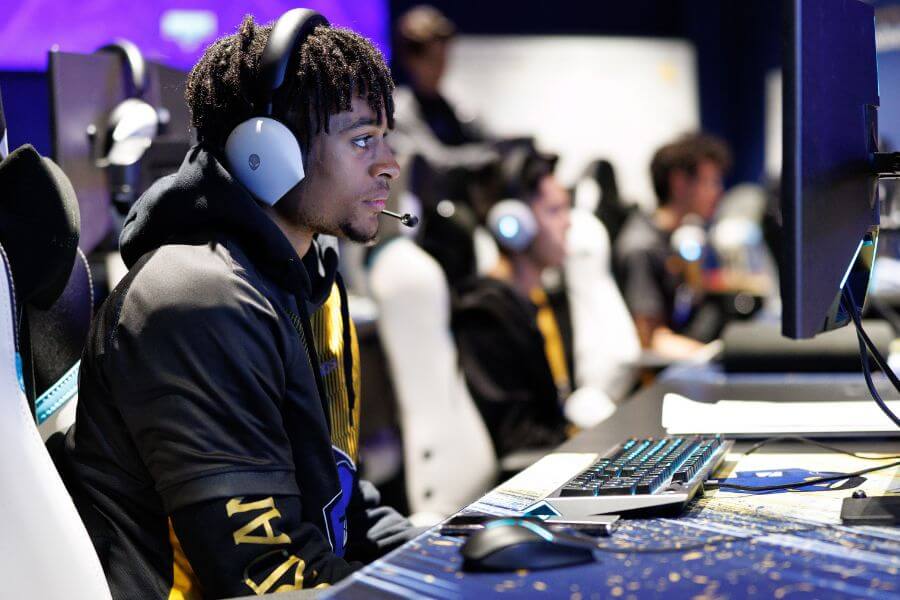
- Simulation and gaming,
- Programming languages and
- Computer security
- Current and relevant technical knowledge
- Flexible curriculum including internship and research options
- Evening classes
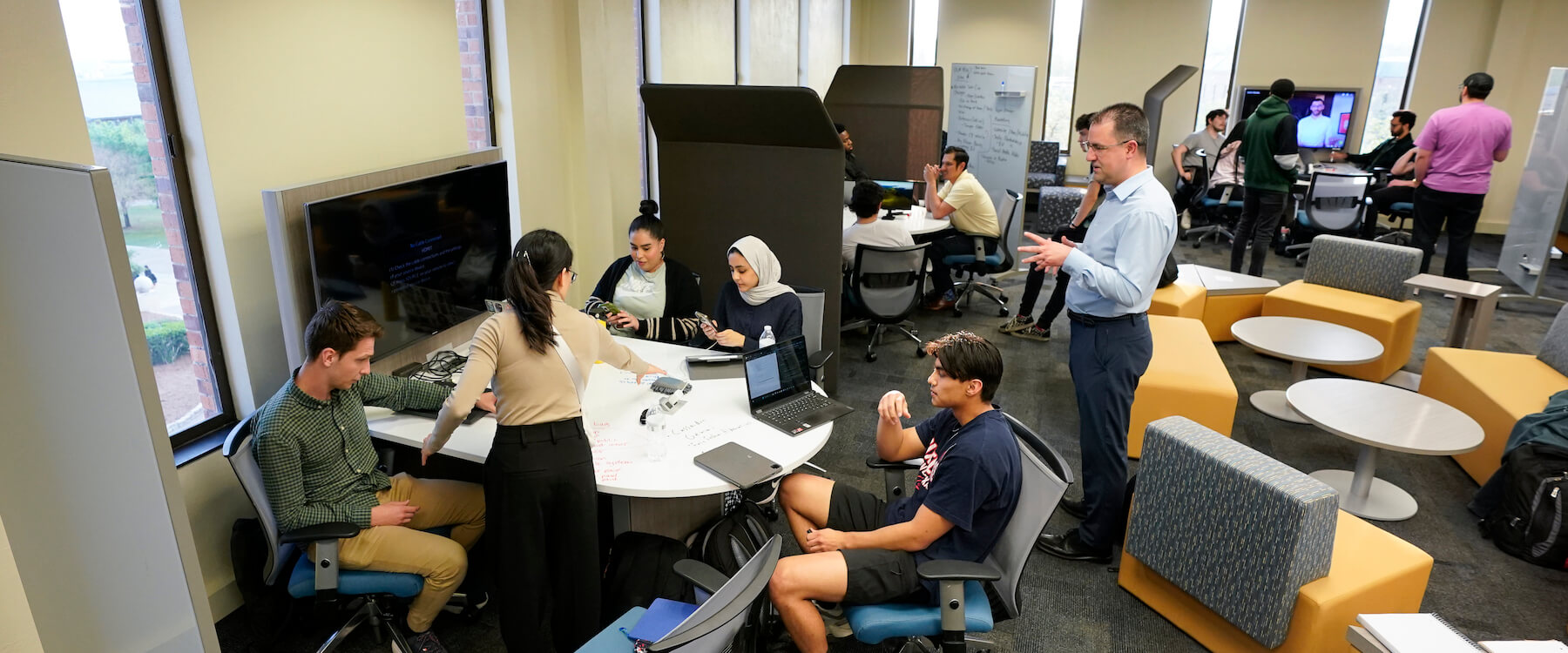
- Small class sizes with supportive atmosphere
- Multiple class locations
- Faculty with theoretical and real-world experience and lessons
- Academically stimulating community
- Cooperative and collaborative learning environment
The Master of Science in Computer Science is sometimes offered off-campus at various locations, and some courses are offered online.
Program of Study
The Master of Science in Computer Systems degree is a 33-hour program with a comprehensive project. Students complete 11 required classes. Eight of the 11 courses are from the computer science department with the other three courses from engineering.The comprehensive project is typically started two semesters before graduation and is presented to a committee of 3 or more professionals around 6 weeks before graduation.
A typical selection of courses for full-time students can be seen below. It is best to complete CS6310 Systems Analysis and Design before CS6340 Advanced Software Engineering. Students from outside of the United States who speak English as a second language need to take an English classes at the beginning of their course work depending on English proficiency test scores.
| Fall | CS6320 | CS6350 | EG elective/EN |
| Spring | CS6310 | CS6330 | EG elective |
| Summer | CS elective | CS elective | |
| Fall | CS6340 | CS elective | EG / present project | proposal due mid-May
Courses for the MS in CS
The MS in computer science consists of 11 courses/33 credit hours and a comprehensive project.Required: 15 credit hours
CS 6310 Systems Analysis and Design
CS 6320 Files and Database
CS 6330 Advanced Network and Data Communications
CS 6340 Advanced Software Engineering
CS 6350 Hardware and Operating Systems
Electives CS: 9 credit hours
CS6185/CS 6285/CS 6385 Internship
CS 6315 Artificial Intelligence
CS 6325 Computer Graphics
CS 6375 Special Topics in Computer Science (may be repeated with different topic names)
Electives EG: 9 credit hours
Take any engineering (EG) graduate classes where pre-requisites are met, typically 3 classes for 3 credit hours each. Some common courses taken by MS in CS students include
EG 6309 Human Factors/Ergonomics
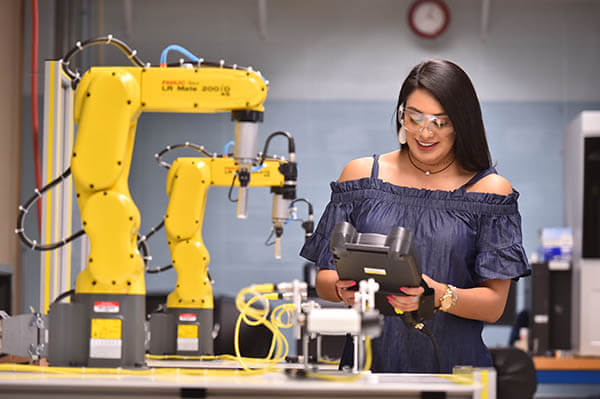
EG 6327 Computer-Aided Manufacturing (CAM) and Robotics
EG 6338 Special Topics
EG 6356 Computer Networking
EG 6370 Parallel Processing
EG 6374 Computer Architecture
EG 6378 Microprocessors
EG 6396 Computer Security
EG 7306 Total Quality Systems
Admission and Prerequisites
Admission is granted to those with high promise for success in graduate study. Applicants demonstrate this potential through previous academic records, testing, certification and work performance. Some talented undergraduates may want to apply to our combined BA/BS+MS program where a student can take up to 12 credit hours of graduate work while completing an undergraduate degree. Those students may take the GRE anytime before the first semester after completing the undergraduate degree. To be considered for admission to the Master of Science in Computer Science program, applicants should have word processing (Microsoft Word equivalent), and computer programming (any high-level language) skills in addition to the following prerequisites:- Calculus with a C or better
- Programming classes including data structures with a C or better
- One other technology-related class
- Minimum grade point average (GPA) of 2.7 out of a possible 4.0 in a bachelor's degree
- Minimum Graduate Record Exam (GRE) quantitative score of at least 143 (480 for scores from before August 2011), or minimum GMAT score of at least 334
- Completed application form (select Apply Online at www.stmarytx.edu/grad) with
- personal statement of purpose indicating interest and objective
- two letters of recommendation
- official transcripts of all college-level work
- minimum TOEFL score of at least 80 on the Internet-based test or IELTS test with a score of 5.0 or better; if the TOEFL score is between 80 and 85 or the IELTS score is between 5.0 and 6.0, students must register into a special English course for graduate international students in their first semester
- TB screening and Meningitis vaccine (for those under 30 years old) before attending
- Completed applications must be in the Graduate Admissions office at least 6 weeks before classes begin to be considered for that semester. GRE and English proficiency scores must be at St. Mary's before the application can be reviewed, and if accepted, an I-20 can be issued. International students may be required to take an English class so that these students can be successful in our classes.
Applicants from other disciplines or lacking specific classes may be admitted with the provision that they take the prerequisite courses selected by the graduate program director on an individual basis. Some of these prerequisites may be fulfilled by work certification or previous experience. Applicants that fail to meet any of the above standards may be admitted on a conditional basis.
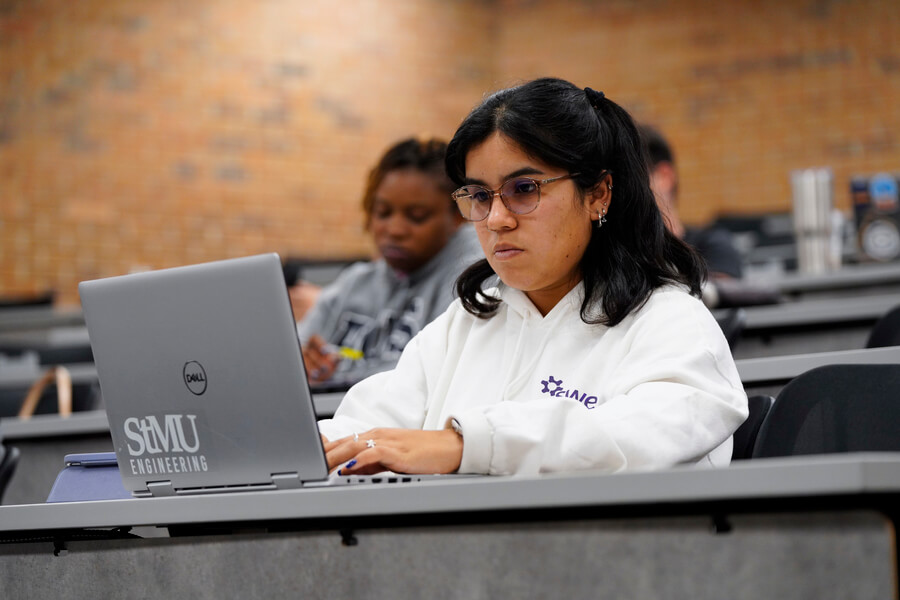
Our students should have their own laptop computers that they bring to class and a printer at their residence. To be compatible with St. Mary's computer systems, check the characteristics of other notebook computers at http://www.stmarytx.edu/admission/index.php?site=notebook.
Faculty
Pamela Fink, Ph.D.
Assistant Professor and Chair of Computer ScienceOffice: Richter 222
Phone: (210) 431-8095
pfink@stmarytx.edu
Full Bio Details
B.S., Eckerd College, 1979
A.M., Duke University, 1982
Ph.D., Duke University, 1983
Pamela Fink, Ph.D., joined St. Mary's in 2002 after having been in industry for more than 17 years. From 1984-1994 at Southwest Research Institute, Fink started and managed a group in applied R&D in artificial intelligence. During that time she acquired and lead programs ranging from basic research in knowledge acquisition and representation to highly applied software development efforts in support of the U.S. Department of Defense and other large customers. Fink left the Institute to take a position in a small, start-up biotechnology company, Medical Science Systems (later renamed Interleukin Genetics), in which she built computer models of biological processes to support drug development and was an inventor/author on three patents. She and two colleagues founded Kenna Technologies, a start-up focused entirely on biological modeling to support drug development.
Her research interests include artificial intelligence, intelligent systems, knowledge acquisition and representation, intelligent tutoring systems, modeling and simulation, and applications of computers to improve healthcare and biological research.
Arthur Hanna, Ph.D.
Associate Professor of Computer ScienceOffice: Richter 224
Phone: (210) 431-2021
ahanna@stmarytx.edu
Full Bio Details
B.S., St. Mary's University, 1975
B.A., St. Mary's University, 1975
M.S., University of Texas-Dallas, 1976
Ph.D., University of Texas-Austin, 1996
Arthur Hanna, Ph.D., has more than 30 years of experience as a consulting software engineer in systems, scientific and business applications. He has managed software development and hardware maintenance operations for several computer-based systems. He has a broad data-processing background encompassing a variety of computer systems, programming languages and application packages.
Hanna served as an officer in the U.S. Army for six years prior to returning to St. Mary's University as a full-time faculty member in August 1982. He also was honored as the Distinguished Faculty member of the School of Science, Engineering and Technology in 1994.
His research interests include computer science education, critical thinking and learning, programming and programming languages, algorithm design and analysis, software engineering, compilers and operating systems.
Carol Luckhardt Redfield, Ph.D.
Professor and Graduate Program Director of Computer Science/Computer Information SystemsOffice: Richter 227
Phone: (210) 436-3298
credfield@stmarytx.edu
Full Bio Details
B.S., University of Michigan, 1980
M.S., in Mathematics, University of Michigan, 1982
M.S., in Computer, Information and Control Engineering, University of Michigan, 1982
Ph.D., University of Michigan, 1989
Carol Luckhardt Redfield joined St. Mary’s in 1998 after having been in industry for more than a dozen years. Including summer jobs at Bell Labs, LLNL, and IBM, she worked in artificial intelligence as a Senior Research Engineer at Southwest Research Institute and as a Senior Scientist at Mei Technology Corporation. She has taught mathematics and computer science since 1980 at various universities, including the University of Michigan, UTSA, and St. Phillips College.
She has volunteered for the San Antonio Space Society and Friends Meeting of San Antonio; brought Landmark Education courses to San Antonio, founded a charter school in the city; and chaired conferences, including the 10th International Space Development Conference in 1991, Intelligent Tutoring Systems in 1998, and Artificial Intelligence in Education in 2001. Redfield was inducted into the San Antonio Women’s Hall of Fame for the 1992 Science category, given the Alice Wright Franzke Feminist Award in 2007, and received the Distinguished Faculty Award for 2008-2009 from St. Mary’s Graduate School. She is married to an engineer and has two children.
Her research interests include artificial intelligence, expert systems/knowledge engineering, educational software, and game/computer-based training/intelligent tutoring, eLearning, game development, and search engine optimization.


Favorites
Facebook
Twitter
Digg
Del.icio.us
Technorati
Reddit
Newsvine
StumbleUpon
MySpace