

Courses
- Statics
- Computational Methods for Engineering
Education
- B.A. in Mechanical Engineering
- M.A. in Engineering
- Ph.D in Engineering
Research Interest
- Architected Material Design and Analysis
- Digital-twins
- Finite Element Analysis
- Fracture Mechanics
- High-performance computing
- Metal Additive Manufacturing
- Optimization
- Sensitivity Analysis
- Surrogate modeling
- Uncertainty Quantification
Biography
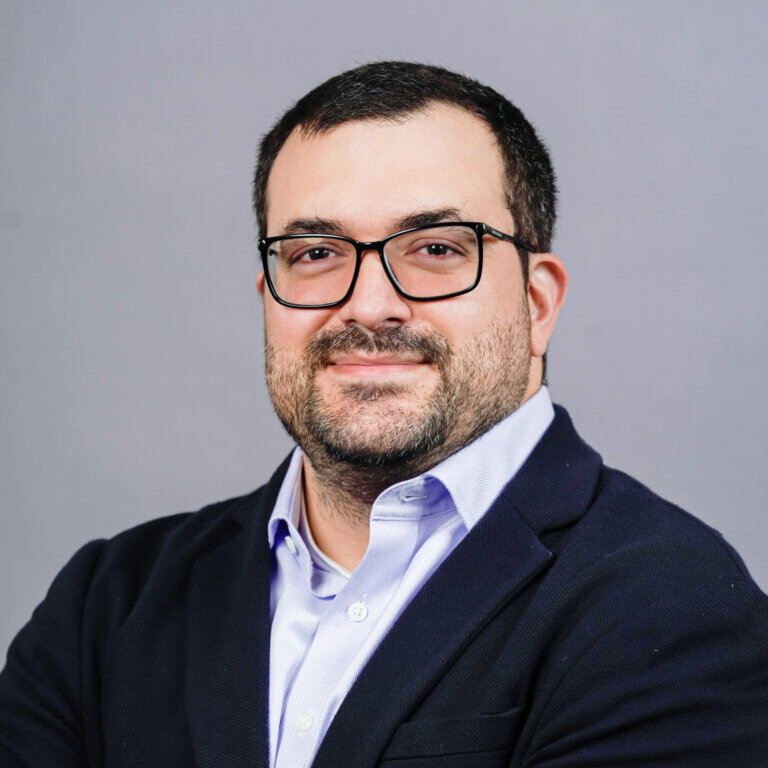
Mauricio Aristizabal is an Assistant Professor of Mechanical Engineering at St. Mary’s University since August 2025. Aristizabal obtained his Bachelors in Mechanical Engineering in 2012, Masters in Engineering in 2014 and Ph.D in Engineering in 2020 from Universidad EAFIT in Medellin, Colombia.
Prior to joining St. Mary’s, Aristizabal held appointments of Assistant Professor of Research (2023-2025) and Postdoctoral Fellow (2021-2023) at the University of Texas at San Antonio. Aristizabal is the originator of the Order Truncated Imaginary numbers, a hypercomplex algebra that allows efficient and automatic arbitrary-order differentiation of computational models. Aristizabal’s research is focused on enhancing and developing computational methodologies for simulating mechanical and physical phenomena, with a strong focus on the areas of sensitivity analysis, optimization, uncertainty quantification, finite element analysis, digital twins and high-performance computing.
Aristizabal’s research also encompasses the development of methods that efficiently integrate differentiability of computational models of physical phenomena for a wide range of applications, some of which are metal additive manufacturing, architected material design and analysis and fracture mechanics. Aristizabal has been a strong contributor to the development and implementation of the Hypercomplex-based Automatic Differentiation method (HYPAD). Aristizabal’s research has been published in top-rated journals like the Journal of Computer Methods in Applied Mechanics and Engineering, the Journal of Computational Physics and the Journal of Applied Mathematics and Computation, among others.
Awards and Honors
- 3rd Place recipient of Postdoctoral Fellow of the Year University of Texas at San Antonio. Sept 2023.
- UQ-MLIP Travel award, USACM. August, 2022.
- Scholarship for Doctoral studies, Colciencias, 2015 – 2018. Colombia (614 from 2014).
Selected Publications
D. Y. Risk-Mora, M. Aristizabal, H. Millwater and D. Restrepo “Efficient uncertainty quantification for critical buckling loads and determination of knockdown factors in nonlinear structures”, International Journal of Solids and Structures, 2026
J. Navarro J. C. Velasquez-Gonzalez, M. Aristizabal, A. Montoya, H. Millwater, D. Restrepo “Arbitrary-Order Sensitivity Analysis of Frequency Response Functions Using Hypercomplex Automatic Differentiation and Spectral Finite Elements” Applied Mathematics and Computation, 2026.
J. Velasquez-Gonzalez, J. Navarro, M. Aristizabal, H. Millwater and D. Restrepo “Derivative-enhanced Bayesian optimization for broad-bandgap phononic metamaterials with hypercomplex automatic differentiation” Finite Elements in Analysis and Design, 2025.
H. Lamy, D. Avila, M. Aristizabal, D. Restrepo, H. Millwater and A. Montoya “Sensitivity analysis for problems exhibiting geometric nonlinearities and follower loads using the complex-variable finite element method” Finite Elements in Analysis and Design, 2025.
J. Rincon-Tabares, M. Aristizabal, A. Montoya, H. Millwater and D. Restrepo, “Sensitivity analysis for the study and enhancement of powder bed fusion of metals via computational models and hypercomplex automatic differentiation” Progress in Additive Manufacturing, 2025.
J. Rincon-Tabares, M. Aristizabal, M. Balcer, A. Montoya, H. Millwater and D. Restrepo “Efficient sensitivity analysis of the thermal profile in powder bed fusion of metals using hypercomplex automatic differentiation finite element method” Additive Manufacturing, 2024.
M. Aristizabal, J. Hernández-Estrada, M. Garcia and H. Millwater “Solution and sensitivity analysis of nonlinear equations using a hypercomplex-variable Newton-Raphson method” Applied Mathematics and Computation, 2023
M. Balcer, M. Aristizabal, J. Rincon-Tabares, A. Montoya, D. Restrepo and H. Millwater “HYPAD-UQ: a derivative-based uncertainty quantification method using a hypercomplex finite element method” Journal of Verification, Validation and Uncertainty Quantification, 2023.
M. Aristizabal, D. Ramirez-Tamayo, M. Garcia, A. Aguirre-Mesa, A. Montoya, H. Millwater “Quaternion and octonion-based finite element analysis methods for computing multiple first order derivatives” Journal of Computational Physics, 2019